


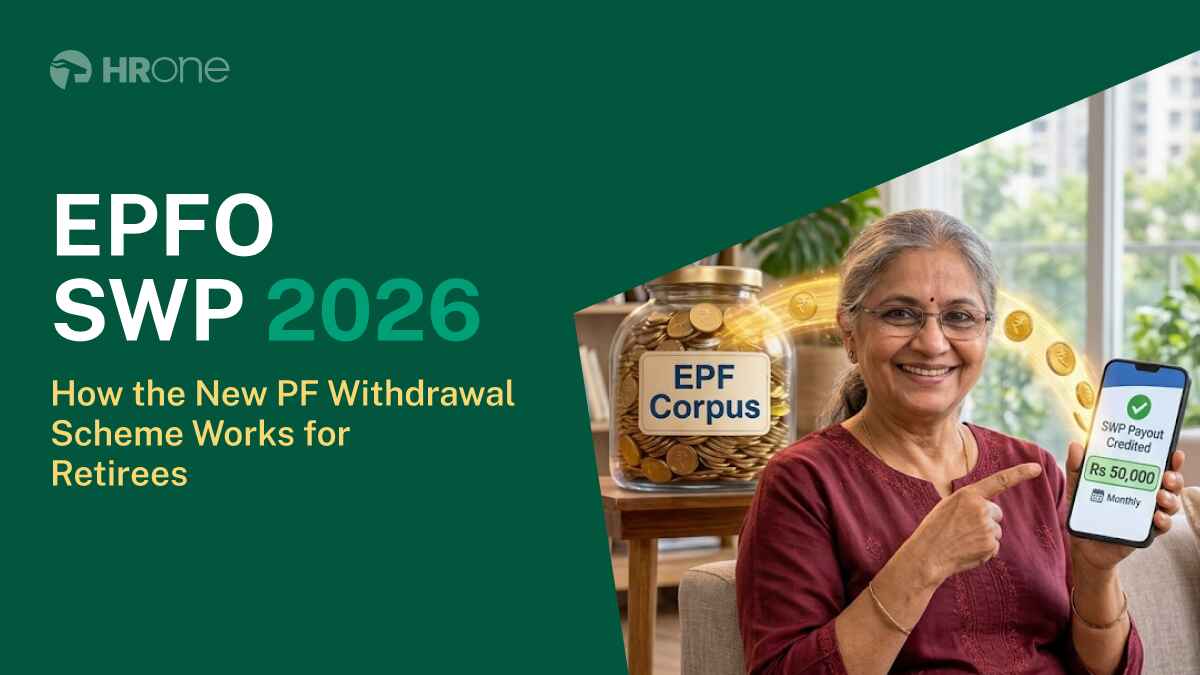
Retirement stops your salary, but daily expenses continue. To provide a steady income after retirement, the EPFO has approved a proposal for a Systematic Withdrawal Plan (SWP). Instead of withdrawing the entire EPF corpus at once, eligible retirees can choose regular payouts monthly, quarterly, or half-yearly, while the remaining balance continues earning returns. The option will be voluntary and will complement EPS pension benefits. It will be available after the required EPF rule changes, and government approvals are notified.
What is the EPFO Systematic Withdrawal Plan (SWP)?
The EPFO Systematic Withdrawal Plan is a proposed retirement withdrawal option that allows eligible EPF members to draw their accumulated provident fund savings in periodic instalments rather than taking a single lump sum at exit.
Imagine an employee retiring with a ₹20 lakh EPF balance. Instead of moving the entire sum out of EPF on day one and deciding where to park every rupee, the member can receive periodic payouts while the unwithdrawn portion stays inside the EPF framework and continues generating returns under applicable rules.
How does the Proposed SWP Work?
- An eligible EPF subscriber reaches retirement.
- The subscriber opts for the SWP facility, subject to final scheme eligibility conditions.
- Scheduled payouts are released at the chosen interval, proposed as monthly, quarterly, or half-yearly.
- The remaining EPF balance stays invested within the EPF framework and continues generating returns.
- If the member passes away during the payout window, a nominee or eligible dependent can access the remaining balance or continue periodic payouts under applicable rules.
What are the New EPF Minimum Balance and PF Withdrawal Rules?
To give EPF members greater access to their savings when needed, the EPFO has approved changes to the minimum balance requirement and PF withdrawal rules. The move aims to strike a balance between improving financial flexibility and ensuring that members retain adequate retirement savings for long-term social security.
- Minimum balance requirement reduced: The CBT has approved reducing the minimum balance requirement to 10% of the EPF balance, down from 25%.
- Waiting period shortened: The CBT has approved shortening the waiting period for final PF withdrawal, reducing it from 12 months to 2 months.
- Greater financial flexibility: The changes allow members to access their funds more quickly during periods of unemployment or financial need.
- Retirement security is preserved: Despite the relaxation, a minimum balance requirement remains in place to safeguard long-term savings.
Relief for Pending EDLI Exemption Cases
EPFO has approved changes to the Employees’ Deposit Linked Insurance (EDLI) Scheme, 2026.
- Eligible establishments with pending or expired exemption cases will get a six-month window to renew their exemptions.
- Employers will also receive relief from contributions, interest, and penalty charges for the verified transition period.
- The move aims to help clear legacy cases and simplify compliance for eligible establishments.
Source: Ministry of Labour and Employment PIB Press Release
Who Is Eligible for the EPFO SWP 2026?
The EPFO’s proposed Systematic Withdrawal Plan is expected to benefit retirees who want a regular income from their provident fund savings instead of a one-time lump sum withdrawal.
According to the Ministry of Labour and Employment, around 6.32 lakh EPF members aged 55 years and above with Provident Fund balances of more than ₹5 lakh are likely to be among the first beneficiaries of the scheme.
However, these are only indicative figures. The final eligibility conditions, withdrawal options, payout frequency, and application process will be announced through official government notifications and EPF Scheme amendments.
EPFO SWP vs. Traditional EPF Withdrawal
The proposed EPFO Systematic Withdrawal Plan gives retirees an alternative way to access their provident fund savings after retirement. Instead of withdrawing the entire EPF corpus at once, members can choose to receive regular payouts while the remaining balance continues to earn EPF returns. This can help create a steady stream of income and support better financial planning during retirement.
| Feature | EPFO SWP (Proposed) | Traditional EPF Withdrawal |
| Payout Method | Receive PF savings in monthly, quarterly, or half-yearly instalments. | Receive the entire eligible PF corpus in one lump sum payment. |
| Income After Retirement | Creates a steady and predictable income stream after retirement. | No regular income. Retirees must manage and withdraw the money themselves. |
| Returns on Remaining Corpus | Unused balance continues to generate EPF returns. | No EPF returns after the corpus is fully withdrawn. |
| Investment/Reinvestment Risk | Lower, as funds remain within the EPF framework and are withdrawn gradually. | Higher, since retirees must decide where and how to invest the lump sum. |
| Flexibility | Members can choose the payout frequency based on their needs. | Full flexibility over the money after withdrawal, but also full responsibility for managing it. |
| Voluntary or Mandatory | Completely voluntary. Members can still choose a lump-sum withdrawal. | Existing default withdrawal option. |
| Family Benefits | Eligible nominees or family members may be allowed to continue payouts or withdraw the remaining balance in certain cases. | Remaining funds are settled according to existing EPF nomination and claim rules. |
Does EPFO SWP replace the EPS Monthly Pension?
The proposed EPFO SWP does not replace the Employees’ Pension Scheme monthly pension. EPS and SWP serve different purposes. Under EPS, eligible members receive a monthly pension based on the scheme’s rules, including their pensionable salary and years of service. In contrast, SWP would allow retirees to receive regular payouts from their own accumulated EPF savings. Here, we can understand the major difference between these two:
- EPS provides a monthly pension as per the pension scheme rules.
- SWP enables scheduled withdrawals from your EPF corpus after retirement.
- Both benefits can work together to provide a more stable retirement income.
- The proposed SWP is designed to supplement, not replace, the EPS monthly pension.

Managing a growing workforce? Let HROne handle the paperwork while your team focuses on people.
What should HR and Payroll Teams do before Notification?
While the proposed EPFO SWP is still awaiting an official government notification, HR, payroll, and employee lifecycle teams can start preparing now. Taking a proactive approach will help organizations answer employee questions confidently, minimize compliance risks, and ensure a smoother retirement and offboarding experience.
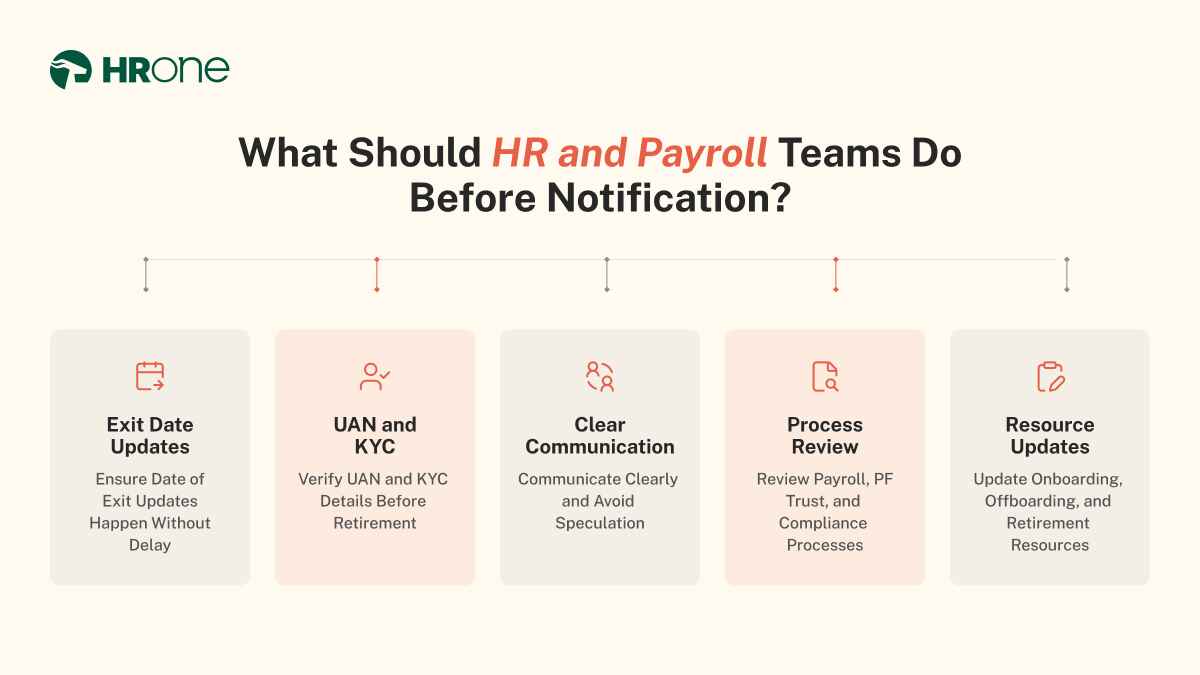
- Ensure Date of Exit Updates Happen Without Delay: Timely Date of Exit updates on the EPFO portal are critical for hassle-free PF settlements. HR and payroll teams should review their offboarding process to ensure employee exit details are recorded accurately and submitted on time, preventing delays in future withdrawal or settlement claims.
- Verify UAN and KYC Details Before Retirement: Instead of waiting until an employee is about to retire, organizations should encourage periodic verification of UAN and KYC information. Aadhaar, PAN, bank account details, and e-nominations should be accurate and up to date to reduce the chances of claim rejections or processing delays when employees need access to their PF savings.
- Communicate Clearly and Avoid Speculation: Employees may start asking how the SWP could affect their retirement plans. HR teams should share only verified information, explaining that the proposal has received CBT approval, but key details such as eligibility conditions, withdrawal limits, payout schedules, and implementation timelines will be confirmed only after the official notification is released.
- Review Payroll, PF Trust, and Compliance Processes: Payroll teams should assess how future retirement withdrawals may impact employee support processes and settlement workflows. Organizations with exempted PF trusts should also review trust administration procedures and EDLI compliance requirements to ensure readiness for any regulatory changes that may accompany SWP implementation.
- Update Onboarding, Offboarding, and Retirement Resources: The introduction of SWP may create new employee questions about long-term retirement planning. Once final rules are announced, organizations should update onboarding materials, employee handbooks, retirement guides, payroll FAQs, and offboarding checklists to reflect the latest EPFO guidelines. This ensures employees receive consistent information throughout their lifecycle, from onboarding to retirement.
When will the EPFO SWP Start?
The proposed EPFO Systematic Withdrawal Plan (SWP) has received approval from the Central Board of Trustees (CBT), marking an important step toward a more flexible retirement withdrawal framework. However, the scheme is not available to EPF members yet.
Before the facility can be rolled out, the government must formally amend the Employees’ Provident Fund Scheme and issue an official notification. In addition, discussions are underway regarding related changes to the Income Tax Act, which could determine how future SWP withdrawals are taxed.
As a result, several key aspects of the proposed scheme are still awaited, including eligibility criteria, withdrawal limits, payout frequency, calculation methodology, application procedures, and tax implications. Until these details are officially notified, EPF members should continue to follow the existing EPFO withdrawal rules and retirement settlement process.
Note: The EPFO SWP remains a proposal until officially notified.
Source: Ministry of Labour and Employment, PIB press release on the 240th CBT meeting, 19 November 2026















 Secures Top Spot in


