



Q1. What Are the 10 Best Recruitment Software for SaaS Hiring in India in 2026?
The 10 best recruitment software for SaaS hiring in India in 2026 are HROne, Keka, Darwinbox, Zoho Recruit, greytHR, Zimyo, Freshteam, Naukri RMS, TurboHire, and Ceipal. HROne leads because SaaS teams get recruitment software inside a full HCM, with AI relevancy scoring, replacement-hire triggers, and India’s first inbuilt ROI Dashboard, instead of a standalone ATS (applicant tracking system) that stalls once hiring scales past a few hundred people.
Choosing recruitment software is a high-stakes call for a SaaS company scaling from 100 to 500-plus employees, where a wrong pick means recruiters burn out and top talent slips to faster rivals. We evaluated 10 platforms against defined operator criteria, writing first for the recruiter and HR ops lead who live inside the tool daily, and for the CHRO, CFO, and IT Director who sign off on it. This is not a popularity list. It is a shortlist you can take into an RFP (request for proposal) with confidence.
📊 How We Scored Each Tool
I have sat through enough vendor demos to know that a feature list tells you almost nothing about what breaks on a Monday. So we weighted the criteria that actually decide whether HR reclaims time or just gets a prettier portal.
- Cross-Functional HR Intelligence (25%): Does recruitment data flow into onboarding, payroll, and analytics, or does someone re-key it three times?
- Scalability and Automation (25%): AI CV screening, knockout pre-screening, and workflows that scale past 500 employees.
- Pricing and ROI Transparency (20%): Clear PEPM (per employee per month) pricing and a way to prove savings to the board.
- Setup and Usability (15%): Go-live speed and whether daily users need training.
- User Reviews (15%): Verified G2 sentiment, the good and the bad.
Scores map to stars: 0 to 20 earns 1 star, 21 to 40 earns 2, 41 to 60 earns 3, 61 to 80 earns 4, and 81 to 100 earns 5.
⭐ Comparison Table: 10 Recruitment Platforms at a Glance
| Provider (⭐) | Best For | Standout Strength | Known Limitation | AI Depth | Support Model | Pricing Model |
|---|---|---|---|---|---|---|
| HROne ⭐⭐⭐⭐⭐ | HR ops leads who want hiring, payroll, and onboarding in one connected flow | AI relevancy scoring plus India’s first inbuilt ROI Dashboard inside a full HCM | Advanced performance and audit features feel lighter on mobile than web | High (resume relevancy, receipt parser, AI agent) | Phone, email, and prior-HR onboarding SPOC | Flat PEPM, no lock-in, billing after go-live |
| Keka ⭐⭐⭐ | Mid-market HR teams wanting a polished UI with Keka Hiro hiring workflows | Intuitive interface and strong day-to-day payroll automation | Implementation delays and weekend support gaps reported by users | Moderate | Email-led, limited weekend cover | Per employee/month, quote-based tiers |
| Darwinbox ⭐⭐⭐⭐ | Large enterprises needing a recognizable brand across pan-India units | Comprehensive module suite with a strong mobile app | Tab and email juggling to close tasks; billing from day one | Moderate to High | Vendor-led, mixed support feedback | Quote-based, multi-year contracts |
| Zoho Recruit ⭐⭐⭐ | Small teams already inside the Zoho ecosystem | Tight integration with Zoho People and Zoho Payroll | Shallow feature depth; slow support response reported | Moderate | Email and ticket-based | Per recruiter/month, freemium entry |
| greytHR ⭐⭐⭐ | SMB payroll-first teams with simple hiring needs | Reliable core payroll and statutory compliance | Rigid configuration; caps out on complex workflows | Low | Ticket-led, callback within hours | Per employee/month tiers |
| Zimyo ⭐⭐⭐ | Cost-conscious SMB-to-mid-market crossovers | Modular pricing with a broad HR feature set | Depth varies module to module | Moderate | Email and chat | Per employee/month, modular |
| Freshteam ⭐⭐⭐ | Startups wanting a light, quick-to-launch ATS | Simple applicant tracking and careers page setup | Limited depth for high-volume hiring | Low to Moderate | Email and ticket | Per user/month, freemium |
| Naukri RMS ⭐⭐⭐ | High-volume sourcing teams living on Naukri | Deepest native Indian job-board sourcing | Recruitment-only; no HCM connective tissue | Moderate | Account-managed | Quote-based |
| TurboHire ⭐⭐⭐⭐ | Talent teams wanting AI-first candidate scoring | Strong AI resume intelligence and automation | Standalone; needs integration back to HRMS | High | Email and CSM | Quote-based |
| Ceipal ⭐⭐⭐ | Staffing and IT services firms managing bench hiring | Scalable ATS plus VMS for staffing workflows | Steeper learning curve for non-staffing teams | Moderate to High | Email and ticket | Per recruiter/month |
Star ratings reflect our weighted rubric and verified G2 sentiment, not vendor claims. Now let us go one by one.
1.1 HROne: Recruitment Inside a Full Hire-to-Retire Operating System
HROne is the complete hire-to-retire operating system, not another standalone ATS.
🏢 Overview
HROne is a cloud-based, India-first HCM (human capital management) platform founded in 2016 and live across 1,500-plus brands, including enterprises like MR DIY India and Asia Healthcare Holdings. It ranks #3 for Highest Satisfaction on G2 out of 1,17,579 software products worldwide. It is built for the recruiter and HR ops lead who are tired of re-entering the same hire into four disconnected systems.
⚙️ Core Recruitment Capabilities
- AI Relevancy Scoring stacks the most relevant CVs on top with a visible score (for example, 95% or 97% relevant) and the reasons behind it, so recruiters stop reading every resume line by line.
- Knockout Pre-Screening configures disqualifying questions upfront, removing the manual filtering of unfit applicants before a recruiter ever opens the pipeline.
- Auto Replacement Trigger generates a fresh hiring request the moment a resignation lands in the system, so a vacant seat never sits invisible for weeks.
- Manpower Planning and Budgeting lets you allocate headcount budget by job position before a single JD (job description) is posted, ending mid-year “can we afford this hire?” scrambles.
- Super Inbox surfaces every pending approval and task in one Gmail-style HR inbox that closes work in three clicks, replacing tab-switching across five tools.
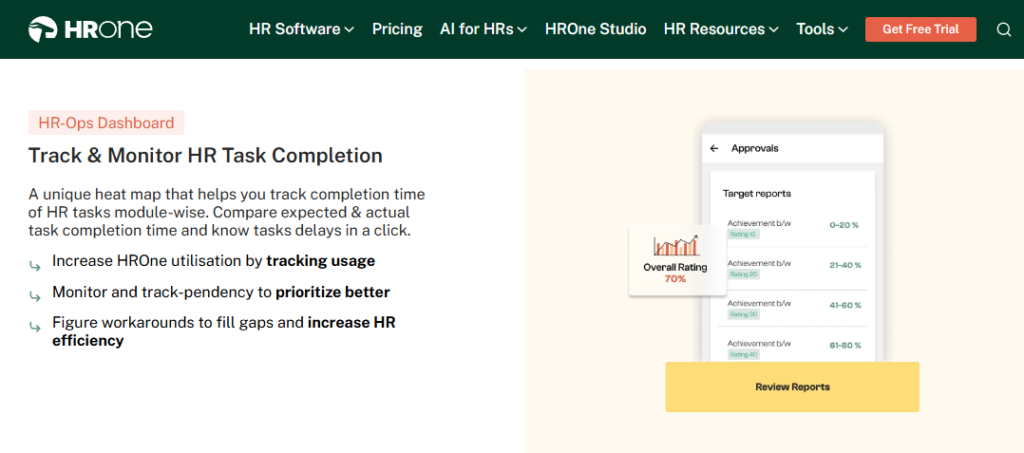
- India’s First Inbuilt ROI Dashboard calculates minutes saved per task against average HR salary, so a CHRO walks into a board review with savings already quantified in rupees.
🇮🇳 India-Specific Compliance and Localization
- PF/ESI/TDS: Yes (automated calculation, filing, and reconciliation).
- Labour law compliance: Strong (new wage-code and statutory logic built in).
- Payroll localization: Yes (CTC revisions, FBP, arrears handled natively by the payroll software).
- Multi-state and multi-legal-entity: Yes (Asia Healthcare Holdings runs 20 pan-India units on one instance).
👍 Who This Is Built For
- Recruiter who is manually shortlisting hundreds of CVs for every engineering and GTM role during a hiring sprint.
- HR ops lead who is re-keying a new hire into recruitment, onboarding, and payroll separately every single time.
- CHRO who cannot answer, in a board review, how many days it takes on average to onboard a lateral hire.
👎 Who Should Skip This
- Very small teams (under 50 employees) wanting a lightweight, standalone ATS with no payroll or workforce modules.
- Power users who need deep performance and audit editing primarily on mobile, since some advanced features stay richer on the web version.
💰 Pricing Structure
- Plan Type(s): Flat PEPM across bundled modules, tiers configured by module breadth.
- Starting Price: Not publicly disclosed as a fixed figure. Request a quote on the pricing page; billing meters only after go-live.
- Incremental Cost Drivers: Additional modules and add-ons; no charge until the system is live.
- Implementation Fee: Bundled with a prior-HR onboarding SPOC (single point of contact), not a technical project manager reading a checklist.
- Cost at 200 or 500 Employees: Not publicly disclosed. Flat PEPM keeps per-head cost predictable as you scale.
🔧 Implementation and Support Reality
- Go-live in as little as 30 days for mid-market enterprises via 127 pre-built workflows.
- Support through phone, email, and a dedicated prior-HR SPOC (9.8 NPS reported).
- Data migration is vendor-led; users report ERP transfers completed in hours, not weeks.
💬 Reviews
“The InboxforHR is a game-changer, centralizing every HR task into one simple inbox, cutting down administrative time by 60-70% and preventing tasks from falling through the cracks. The initial setup of HROne was surprisingly straightforward.”
Waldon S. HROne G2 Verified Review
“It can sometimes feel a bit overwhelming for new users. Certain features take time to understand, and without enough guided support, the learning curve can feel quite steep.”
Nijanthan R. HROne G2 Verified Review
Here is my honest read, and I might be biased since we built it: the reason we do not sell recruitment as a standalone product is that customers only get real ROI when hiring connects to payroll, leave management, and attendance. Recruitment is page one of an employee’s lifecycle. If page one lives in a silo, every handoff after it leaks time. What surfaces when you actually run this at scale is that the tool matters less than whether the tools can talk to each other.
1.2 Keka: Polished UI With Hiro Hiring Workflows
Keka is a design-forward mid-market HRMS with a dedicated hiring module called Keka Hiro.
🏢 Overview
Keka is an India-based HRMS founded in 2015, widely adopted across mid-market IT and services firms for its clean interface and payroll engine. It is primarily used by HR teams that want a modern-looking portal and automated salary, attendance, and hiring approvals. Its Hiro module handles resource tracking and offer-letter workflows.
⚙️ Core Recruitment and HR Capabilities
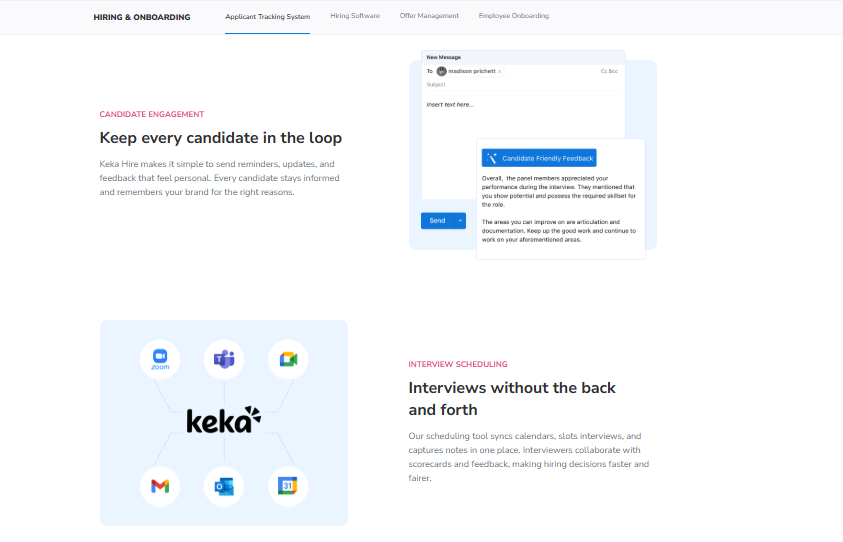
- Keka Hiro automates hiring approvals and offer-letter workflows, reducing manual coordination between recruiters and managers.
- Payroll Engine automates PF, ESI, and TDS calculations, cutting month-end reconciliation errors.
- Document Generation produces most HR letters in-platform, reducing paperwork and protecting confidentiality.
- Employee Self-Service Mobile App lets staff mark attendance and view payslips, easing routine HR queries.
- Performance (PMS) Module structures KRAs and KPIs, though users report it needs simplifying.
🇮🇳 India-Specific Compliance and Localization
- PF/ESI/TDS: Yes (automated salary and statutory processing).
- Labour law compliance: Moderate (occasional payroll processing gaps reported around RBI regulation edge cases).
- Payroll localization: Yes, with some CTC-structure quirks users have flagged.
- Multi-state handling: Partial (zone and location-specific configuration reported as limited).
👍 Who This Is Built For
- HR ops lead who wants a visually intuitive portal that employees adopt without heavy training.
- Payroll manager running standard PF, ESI, and TDS cycles for a stable mid-market headcount.
👎 Who Should Skip This
- Teams needing fast, structured implementation, since users report long, delayed onboarding.
- IT consulting firms needing weekend support and complex location-based leave configuration.
💰 Pricing Structure
- Plan Type(s): Tiered per employee/month plans (Foundation, Strength, Growth as published historically).
- Starting Price: Not publicly disclosed as a fixed India figure. Request a quote.
- Incremental Cost Drivers: Higher tiers unlock performance, hiring, and advanced modules.
- Implementation Fee: Reported separately in some cases; confirm at quote stage.
- Cost at 200 or 500 Employees: Not publicly disclosed. Confirm PEPM at your headcount.
🔧 Implementation and Support Reality
- Go-live timelines reported as slow by several users, with some stuck months into setup.
- Support is largely email and chat-led, with reported gaps on weekends.
- Data migration is vendor-led but coordination is a common pain point in reviews.
💬 Reviews
“strong payroll and compliance, automate salary and attendance processing with pf/esi/tds. Responsive support team. Mobile app available. [But] PMS module is confusing and needs to be simpler and easier to use.”
Kiran B., 3/5 Keka G2 Verified Review
“We started working with Keka HRMS in August, and to this day, we have been unable to implement the tool in our company due to their consistently delayed responses and poor coordination between their internal teams.”
Divya P., 0/5 Keka G2 Verified Review
The standard read says Keka’s polish makes it the safe mid-market pick. From what surfaces in real implementations, the polish is real but the connective tissue is not the same as an integrated HCM. Keka Hiro handles hiring approvals well, yet when a SaaS team scales fast, the gap shows up at the handoffs, where an offer accepted in the ATS still needs manual work to become a live, paid, onboarded employee. This is exactly where HROne’s 127 pre-built workflows and Super Inbox remove the chase, since an accepted offer can trigger the next step through the onboarding process automatically instead of waiting on an email. Teams weighing both options often study a direct HROne vs Keka comparison before shortlisting.
1.3 Darwinbox: Enterprise Brand Weight With Tab-Switching Reality
Darwinbox is an enterprise-grade HCM with strong brand recognition across large Asian firms.
🏢 Overview
Darwinbox is an India-founded HCM launched in 2015, backed by marquee investors and used by large enterprises across India and Southeast Asia. It carries real brand weight in the enterprise segment. It is primarily used by big organizations digitizing scattered, manual HR processes onto one platform.
⚙️ Core Recruitment and HR Capabilities
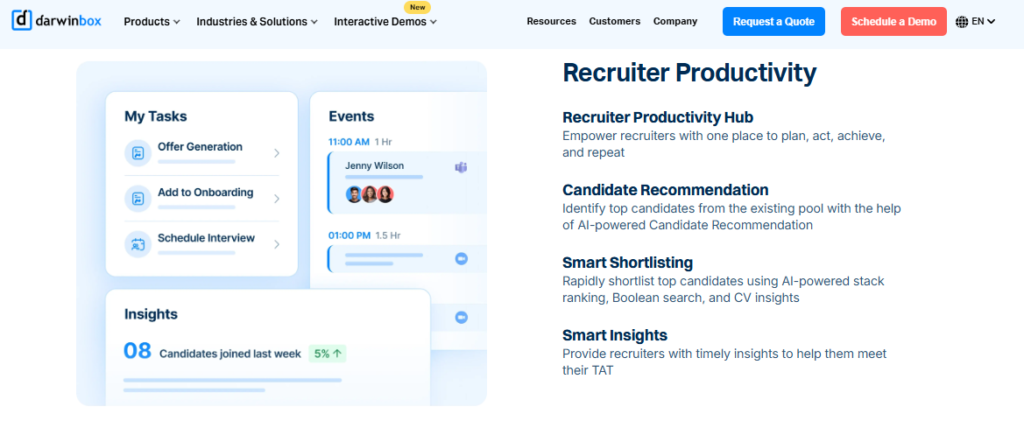
- Recruitment Module manages candidate pipelines and hiring workflows, reducing reliance on Excel and legacy trackers.
- Unified HR Platform brings attendance, leave, payroll, and performance together, cutting duplicate data entry.
- Configurable Workflows let teams adapt processes without heavy technical work, easing internal customization.
- Mobile App allows leave, attendance, and payslip actions on the go, reducing dependency on desktop.
- Performance Management structures reviews, though users report it needs training to use fully.
🇮🇳 India-Specific Compliance and Localization
- PF/ESI/TDS: Yes (standard Indian statutory processing).
- Labour law compliance: Strong (built for large Indian enterprises).
- Payroll localization: Yes.
- Multi-state handling: Yes (used across pan-India enterprise setups).
👍 Who This Is Built For
- CHRO at a large enterprise who needs a recognizable brand for board and investor confidence.
- HR ops lead consolidating scattered Excel sheets and legacy tools into one platform.
👎 Who Should Skip This
- Lean 100 to 500-employee SaaS teams wanting fast go-live without enterprise-scale complexity.
- Teams that need every daily task closed in one inbox rather than juggling tabs and emails.
💰 Pricing Structure
- Plan Type(s): Enterprise plans, quote-based.
- Starting Price: Not publicly disclosed. Request a quote.
- Incremental Cost Drivers: Module add-ons, entity count, and enterprise support tiers.
- Implementation Fee: Typically separate; confirm at quote stage.
- Cost at 200 or 500 Employees: Not publicly disclosed. Multi-year contracts are common.
🔧 Implementation and Support Reality
- Implementation can be lengthy, with some users reporting a difficult transition from old systems.
- Support is vendor-led, with mixed feedback in reviews.
- Data migration is vendor-led but flagged as tricky during switchover.
💬 Reviews
“Darwinbox has helped us digitize and streamline our HR operations, from onboarding and attendance to payroll and performance management. Earlier, we used a mix of Excel sheets and legacy tools; now everything is centralized.”
Mohit V., 4/5 Darwinbox G2 Verified Review
“Bad implementation experience, bad UI/UX, configurations getting broken in production on its own due to product deployments, terrible customer service.”
Verified User in Computer Software, 0/5 Darwinbox G2 Verified Review
Here is where I will hedge a claim I feel confident about. Darwinbox is a genuinely capable enterprise platform, and its brand opens doors in board rooms. But from what surfaces when you actually run daily HR work, brand weight does not close a task, and users still report juggling tabs and emails. This is the exact gap our HR inbox targets, surfacing every pending approval in one Gmail-style view that closes in three clicks, and our ROI Dashboard puts a rupee figure on the hours that saves. Teams weighing both often read a direct HROne vs Darwinbox comparison first.
1.4 Zoho Recruit: Ecosystem Fit With Shallow Depth
Zoho Recruit is a global generalist ATS that shines when you already live inside Zoho.
🏢 Overview
Zoho Recruit is the applicant tracking product within the Zoho suite, serving startups and SMBs worldwide. Its strength is tight integration with Zoho People (HR) and Zoho Payroll. It is primarily used by teams already inside the Zoho ecosystem wanting recruitment to plug into existing HR and payroll apps.
⚙️ Core Recruitment and HR Capabilities
- Candidate Self-Onboarding lets applicants enter their own data, completing onboarding within a day.
- Zoho Ecosystem Integration connects Recruit with People and Payroll, streamlining hire-to-pay handoffs.
- Attendance and Leave Management handles requests digitally with manager approvals, cutting email back-and-forth.
- Business-Unit Views organize employee data by unit, easing multi-team management.
🇮🇳 India-Specific Compliance and Localization
- PF/ESI/TDS: Partial (via Zoho Payroll, with feature depth gaps reported).
- Labour law compliance: Moderate (global generalist, not India-first).
- Payroll localization: Partial (under-serves India-specific CTC and FBP nuances).
- Multi-state handling: Partial.
👍 Who This Is Built For
- HR ops lead already running Zoho People and Zoho Payroll who wants recruitment in the same suite.
- Startup founder wanting affordable, fast onboarding without deep customization needs.
👎 Who Should Skip This
- Teams needing deep, India-tuned payroll and compliance instead of shallow, broad features.
- Users who need fast, reliable support, since response times are a common complaint.
💰 Pricing Structure
- Plan Type(s): Free, Standard, Professional, Enterprise (per recruiter/month).
- Starting Price: Freemium entry; paid tiers billed per recruiter, monthly or annually.
- Incremental Cost Drivers: More recruiters, add-ons, and higher tiers unlock features.
- Implementation Fee: Typically none for self-serve.
- Cost at 200 or 500 Employees: Not directly headcount-priced; scales by recruiter seats.
🔧 Implementation and Support Reality
- Setup is largely self-serve, aided by instructional videos.
- Support is email and ticket-based, with slow response times reported.
- Data migration is self-serve within the Zoho ecosystem.
💬 Reviews
“What I appreciate most about Zoho People is its onboarding process. Candidates can enter their own information. The most important feature for me is its integration with other Zoho apps, such as Zoho Recruit and Zoho Payroll.”
Dhana C., 4/5 Zoho People G2 Verified Review
“Features are shallow and there is no depth in each application.”
Verified User in IT and Services, 2.5/5 Zoho People G2 Verified Review
My current thinking is that Zoho Recruit is a smart pick if, and only if, you already live in Zoho. The integration is the moat. But for a compliance-heavy Indian mid-market firm, “shallow but broad” becomes a real problem the moment CTC revisions, FBP declarations, and new wage-code FFS (full and final settlement) rules land. That depth is what we built HROne around, since India-first payroll software is a foundation, not a bolt-on.
1.5 greytHR: Reliable SMB Payroll That Caps Out
greytHR is a dependable SMB payroll and compliance tool that struggles beyond simple needs.
🏢 Overview
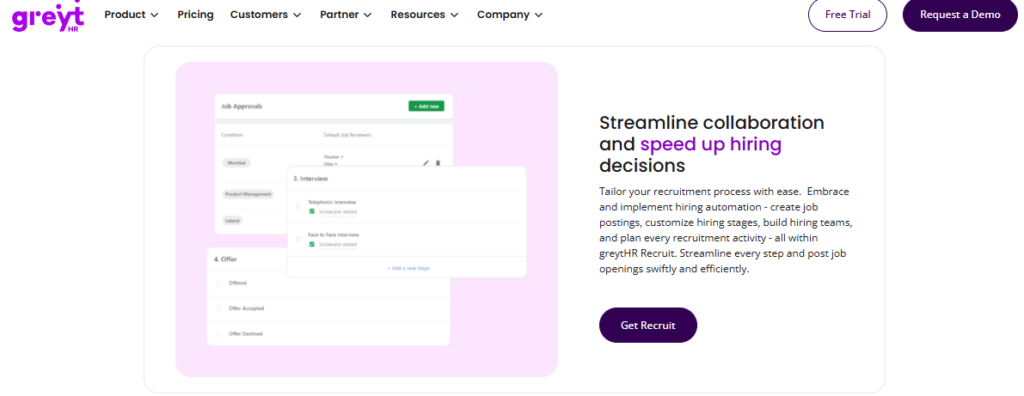
greytHR is one of India’s longest-running HR and payroll platforms, widely adopted by SMBs for statutory payroll. Its strength is reliable core payroll and compliance. It is primarily used by small teams that need dependable payslips, leave, and statutory filing without heavy configuration.
⚙️ Core Recruitment and HR Capabilities
- Payroll Engine processes salary and statutory deductions, reducing manual payslip work.
- Employee Self-Service lets staff access payslips, leave, and tax details, increasing transparency.
- Tax Declaration Module supports multiple tax regimes, easing employee filing.
- Leave and Attendance covers basic tracking, though customization is limited.
🇮🇳 India-Specific Compliance and Localization
- PF/ESI/TDS: Yes (core strength for SMB statutory payroll).
- Labour law compliance: Moderate (solid for simple setups, rigid for complex ones).
- Payroll localization: Yes.
- Multi-state handling: Limited (caps out on complex multi-entity needs).
👍 Who This Is Built For
- Payroll manager at an SMB wanting dependable monthly payslips and statutory filing.
- HR generalist needing employee self-service without deep workflow customization.
👎 Who Should Skip This
- Multi-legal-entity or shift-based manufacturing firms needing flexible, custom workflows.
- Teams wanting responsive support and easy in-house customization.
💰 Pricing Structure
- Plan Type(s): Tiered per employee/month plans.
- Starting Price: Not publicly disclosed as a fixed figure. Request a quote.
- Incremental Cost Drivers: Higher tiers and add-on modules.
- Implementation Fee: Confirm at quote stage.
- Cost at 200 or 500 Employees: Not publicly disclosed.
🔧 Implementation and Support Reality
- Implementation can surface leave-balance and config issues, per users.
- Support is ticket-led, with callbacks reported within one to two hours by some, and poor by others.
- Data migration is vendor-assisted but flagged as gap-prone.
💬 Reviews
“GreytHR is fine software for payroll processing and I have been using [it] since 10 years. Better UI, simplicity and time for support.”
Krishnanand B., 3/5 greytHR G2 Verified Review
“GreytHR is not much good at customizing based on our requirements. From implementation onwards, there were issues with leave balance. We cannot properly implement our company policies due to the limitations of greytHR.”
Verified User in IT and Services, 2/5 greytHR G2 Verified Review
The standard read treats greytHR as the safe budget choice, and for a simple 50-person SMB, it often is. But the moment a second legal entity or a shift-based factory floor appears, rigid configuration becomes a monthly tax on the HR team’s time. Working with mid-market teams, what I have felt is that “reliable for simple” quietly becomes “manual for everything else.” Our 127 pre-built workflows exist precisely so a multi-entity setup does not mean re-correcting leave balances by hand, which is one reason teams compare HROne vs greytHR before switching.
1.6 Zimyo: Cost-Conscious Modular HRMS for Crossovers
Zimyo is a cost-conscious modular HRMS for SMB-to-mid-market crossovers.
🏢 Overview
Zimyo is an India-based HRMS serving cost-sensitive SMB and growing mid-market teams. Its appeal is modular pricing with a broad HR feature set. It is primarily used by teams that want to pay only for the modules they actually need while scaling.
⚙️ Core Recruitment and HR Capabilities
- Recruitment and ATS manages job posts and candidate pipelines, reducing manual tracking.
- Payroll Engine automates statutory deductions, cutting month-end reconciliation work.
- Modular Add-Ons let teams switch on performance or engagement as they grow, controlling cost.
- Employee Self-Service covers attendance, leave, and payslips, reducing HR queries.
🇮🇳 India-Specific Compliance and Localization
- PF/ESI/TDS: Yes (India-focused statutory support).
- Labour law compliance: Moderate.
- Payroll localization: Yes.
- Multi-state handling: Moderate (depth varies by module maturity).
👍 Who This Is Built For
- HR lead at a cost-sensitive SMB scaling toward mid-market who wants pay-for-what-you-use pricing.
- Founder wanting a broad HR base without a full enterprise commitment.
👎 Who Should Skip This
- Large enterprises needing consistent depth across every module rather than variable maturity.
- Teams needing India’s most complex multi-entity compliance out of the box.
💰 Pricing Structure
- Plan Type(s): Modular per employee/month plans.
- Starting Price: Not publicly disclosed as a fixed figure. Request a quote.
- Incremental Cost Drivers: Each additional module raises the per-head cost.
- Implementation Fee: Confirm at quote stage.
- Cost at 200 or 500 Employees: Not publicly disclosed. Modular pricing scales by chosen modules.
🔧 Implementation and Support Reality
- Go-live is generally quicker for SMB setups than enterprise platforms.
- Support is email and chat-based.
- Data migration is vendor-assisted.
I will be honest that Zimyo is a reasonable value pick, and I do not want to overstate its gaps. My hedge is on depth consistency, since modular platforms can feel uneven module to module. For a SaaS team scaling fast, the risk is outgrowing the very modules you started with. The reason we ship 30-plus modules and 127 pre-built workflows on one connected core HCM is so growth never forces a re-platform mid-journey.
1.7 Freshteam: Light, Quick-to-Launch ATS for Startups
Freshteam is a lightweight applicant tracking system built for fast-moving startups.
🏢 Overview
Freshteam is the HR and recruiting product from the Freshworks family, aimed at startups and small teams. Its strength is a simple, quick-to-launch ATS with a clean careers page. It is primarily used by early-stage teams that want to post jobs and track candidates without heavy setup.
⚙️ Core Recruitment and HR Capabilities
- Applicant Tracking organizes candidate pipelines by stage, reducing spreadsheet chaos.
- Careers Page Builder publishes branded job listings quickly, easing sourcing.
- Basic Onboarding manages new-hire tasks, cutting manual coordination.
- Time-Off Management tracks leave for small teams, reducing email requests.
🇮🇳 India-Specific Compliance and Localization
- PF/ESI/TDS: No (not a payroll-first platform).
- Labour law compliance: Limited.
- Payroll localization: No.
- Multi-state handling: Limited.
👍 Who This Is Built For
- Startup founder or recruiter who wants a job pipeline live in a day, not a quarter.
- Small team needing simple applicant tracking without payroll depth.
👎 Who Should Skip This
- Mid-market Indian firms needing integrated payroll, compliance, and workforce management.
- High-volume hiring teams needing deep AI screening and analytics.
💰 Pricing Structure
- Plan Type(s): Free tier plus paid recruiting tiers (per user/month).
- Starting Price: Freemium entry; paid tiers billed per user.
- Incremental Cost Drivers: More users and higher tiers unlock features.
- Implementation Fee: Typically none for self-serve.
- Cost at 200 or 500 Employees: Not directly headcount-priced; scales by users.
🔧 Implementation and Support Reality
- Setup is fast and self-serve for small teams.
- Support is email and ticket-based.
- Data migration is self-serve.
My read here is simple, and I will say it plainly. Freshteam is great at exactly one job, tracking applicants for a small team, and it does not pretend otherwise. The trade-off is that recruitment lives in a silo, disconnected from payroll and workforce data. That works until the moment your startup crosses 100 employees and every handoff turns manual. This is the whole reason we treat recruitment software as page one of a connected lifecycle, not a standalone tool.
1.8 Naukri RMS: Deepest Native Indian Sourcing
Naukri RMS is a recruitment management system tied to India’s largest job board.
🏢 Overview
Naukri RMS is the recruitment management product from Naukri (Info Edge), India’s dominant job portal. Its unmatched strength is native access to one of the country’s deepest candidate databases. It is primarily used by high-volume sourcing teams that live on Naukri for talent.
⚙️ Core Recruitment and HR Capabilities
- Native Naukri Sourcing taps India’s largest candidate pool directly, reducing external sourcing effort.
- Candidate Database Search filters millions of profiles, speeding shortlisting.
- Applicant Tracking manages pipelines from source to offer, cutting manual trackers.
- Resume Management centralizes CVs, reducing scattered inbox chaos.
🇮🇳 India-Specific Compliance and Localization
- PF/ESI/TDS: No (recruitment-only, not payroll).
- Labour law compliance: Not applicable (sourcing focus).
- Payroll localization: No.
- Multi-state handling: Not applicable.
👍 Who This Is Built For
- Recruiter running high-volume Indian hiring who needs the deepest candidate pool.
- Talent acquisition lead who sources primarily from Naukri already.
👎 Who Should Skip This
- Teams needing an end-to-end HCM connecting hiring to payroll and workforce.
- Firms wanting hire-to-retire ROI tracking rather than sourcing alone.
💰 Pricing Structure
- Plan Type(s): Quote-based recruiter and database access plans.
- Starting Price: Not publicly disclosed. Request a quote.
- Incremental Cost Drivers: Database access seats and job-posting volume.
- Implementation Fee: Confirm at quote stage.
- Cost at 200 or 500 Employees: Not headcount-priced; scales by recruiter seats and sourcing volume.
🔧 Implementation and Support Reality
- Setup centers on database and job-board access.
- Support is account-managed.
- Data migration is largely self-serve.
I will not pretend to compete with Naukri on sourcing depth, because that would be dishonest. If raw Indian candidate reach is your single biggest bottleneck, Naukri is hard to beat. My point of view is that sourcing is only page one of one chapter. Once a candidate says yes, they still need onboarding, payroll, and a live employee record, which is exactly where a sourcing-only tool ends and a full onboarding process inside an operating system like ours begins.
1.9 TurboHire: AI-First Candidate Intelligence
TurboHire is an AI-first recruitment automation platform focused on candidate scoring.
🏢 Overview
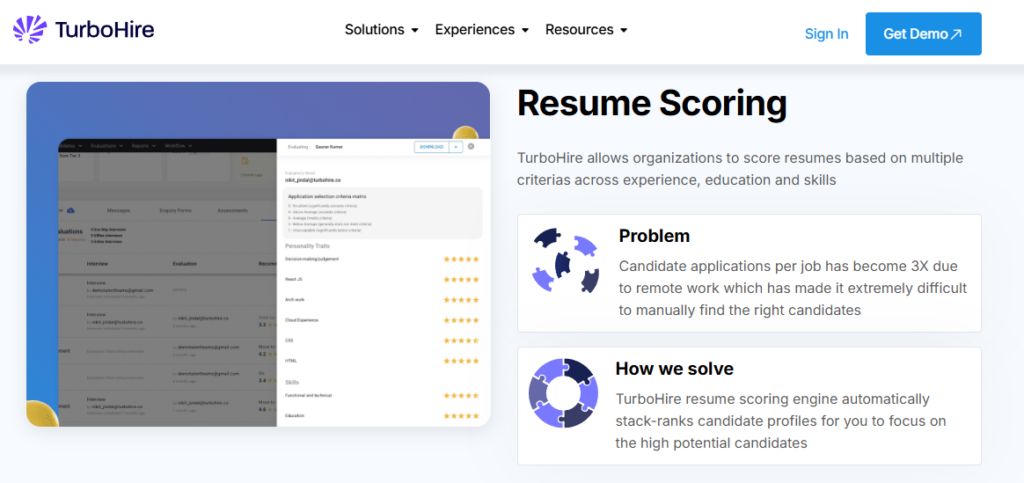
TurboHire is an India-based recruitment automation platform built around AI resume intelligence. Its strength is strong AI-driven candidate scoring and screening. It is primarily used by talent teams that want to automate shortlisting rather than read every CV manually.
⚙️ Core Recruitment and HR Capabilities
- AI Candidate Scoring ranks applicants by fit, reducing manual resume screening.
- Resume Parsing extracts structured data from CVs, cutting data-entry time.
- Interview Automation schedules and structures interviews, easing coordination.
- Recruitment Analytics tracks pipeline metrics, improving hiring decisions.
🇮🇳 India-Specific Compliance and Localization
- PF/ESI/TDS: No (recruitment-only, not payroll).
- Labour law compliance: Not applicable (hiring focus).
- Payroll localization: No.
- Multi-state handling: Not applicable.
👍 Who This Is Built For
- Talent acquisition lead who wants AI to score and shortlist candidates automatically.
- Recruiter drowning in high applicant volumes who needs fast, ranked pipelines.
👎 Who Should Skip This
- Teams needing recruitment connected to payroll, onboarding, and workforce data.
- Firms wanting a single hire-to-retire platform rather than a best-of-breed ATS.
💰 Pricing Structure
- Plan Type(s): Quote-based plans.
- Starting Price: Not publicly disclosed. Request a quote.
- Incremental Cost Drivers: Volume, AI usage, and integrations.
- Implementation Fee: Confirm at quote stage.
- Cost at 200 or 500 Employees: Not publicly disclosed.
🔧 Implementation and Support Reality
- Setup focuses on AI configuration and integrations.
- Support is email and customer-success-led.
- Data migration is vendor-assisted.
Here is a contrarian take I hold with some conviction. AI candidate scoring is genuinely valuable, and TurboHire does it well, but standalone AI screening solves one narrow slice. What surfaces when you run hiring at scale is that the score means little if it does not flow into onboarding and payroll automatically. That is why our HROne AI Suite lives inside the HCM, so AI relevancy scoring feeds the same connected record that later runs zero-delay payroll.
1.10 Ceipal: Staffing and Bench Hiring at Scale
Ceipal is a scalable ATS and workforce platform built for staffing and IT services firms.
🏢 Overview
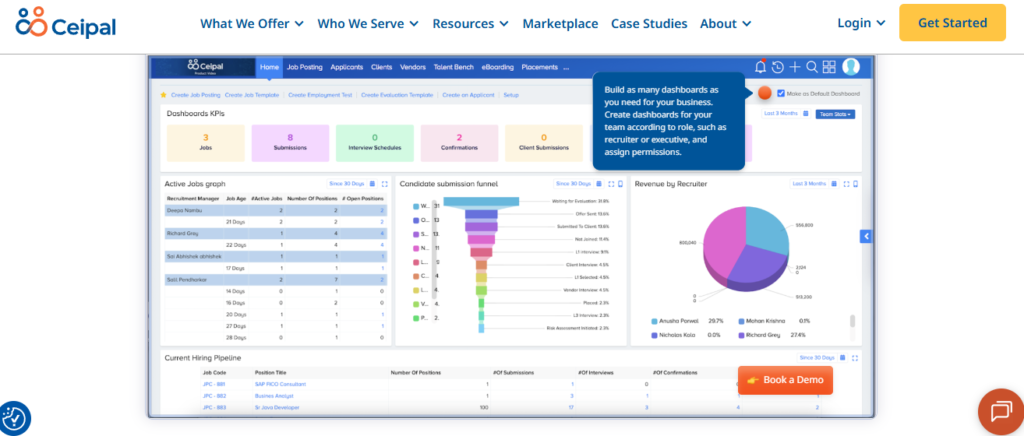
Ceipal is a US-founded talent acquisition and workforce platform popular with staffing agencies and IT services firms, including those in India. Its strength is scalable applicant tracking plus vendor management for staffing. It is primarily used by teams managing large contingent workforces and bench hiring.
⚙️ Core Recruitment and HR Capabilities
- Applicant Tracking (ATS) manages large candidate pipelines, reducing manual tracking at scale.
- Vendor Management (VMS) handles staffing vendors and contractors, easing bench management.
- AI Sourcing automates candidate matching, speeding high-volume placement.
- Workforce Management tracks contingent staff, reducing spreadsheet dependency.
🇮🇳 India-Specific Compliance and Localization
- PF/ESI/TDS: Partial (staffing focus, not India payroll-first).
- Labour law compliance: Limited (built for staffing, not deep Indian statutory).
- Payroll localization: No.
- Multi-state handling: Limited.
👍 Who This Is Built For
- Staffing agency recruiter managing high-volume placements and bench hiring.
- IT services firm coordinating contractors across multiple vendors.
👎 Who Should Skip This
- Product companies wanting India-first payroll and an integrated employee lifecycle.
- Non-staffing teams facing a steeper learning curve for staffing-specific features.
💰 Pricing Structure
- Plan Type(s): Per recruiter/month plans.
- Starting Price: Not publicly disclosed as a fixed India figure. Request a quote.
- Incremental Cost Drivers: More recruiter seats, VMS, and AI add-ons.
- Implementation Fee: Confirm at quote stage.
- Cost at 200 or 500 Employees: Not headcount-priced; scales by recruiter seats.
🔧 Implementation and Support Reality
- Setup centers on ATS and VMS configuration for staffing workflows.
- Support is email and ticket-based.
- Data migration is vendor-assisted.
My honest read is that Ceipal is excellent for the staffing world, and it is not really trying to be a mid-market HCM. If you place contractors for a living, its ATS-plus-VMS combination is a strong fit. But for a 100 to 5,000-employee product company in India, staffing-first architecture leaves the payroll, compliance, and lifecycle work on your plate. That full path, from manpower requisition to FFS settlement with ROI attached, is the exact gap our workforce management and connected operating system are built to close.
Q2. Why Do SaaS Companies Outgrow a Standalone ATS at Scale?
SaaS companies outgrow standalone ATS (applicant tracking system) tools because recruitment data does not flow into onboarding, payroll, and analytics. So recruiters become data-entry clerks, re-keying each hire three times. One operator reportedly went through three system changes in under four years before landing on a true HCM. Recruitment inside a full platform means an accepted offer auto-creates the employee record, salary structure, and onboarding task in one flow.
🔌 The Real Problem: Tools That Cannot Talk
Here is the pain nobody puts on a demo slide. Your ATS holds the hire, your payroll tool holds the salary, and your attendance system holds the punches. None of them talk to each other. So someone on your team types the same new joiner into three places.
That is not a small annoyance. It is where errors, delays, and quiet distrust breed. A wrong CTC (cost to company) entry becomes a wrong first paycheque. This is precisely where connected payroll software ends the double entry.
😮💨 Why It Gets Worse as You Scale
At 40 people, manual re-keying is survivable. At 400, it burns out your recruiter and blinds your leadership.
The CHRO (Chief Human Resources Officer) walks into a board review and cannot answer a basic question. How many days does it take, on average, to onboard a lateral hire? A standalone ATS has no way to tell them, because the data dies at the offer stage. A connected onboarding process keeps that data alive past the offer.
“Lack of customization options are not expected from a full service HRMS. No self onboard options as well. Lot of manual work that the team still has to do.”
Verified User in Internet, 2.5/5 Keka G2 Verified Review
“We are ending up doing most of the products manually and all the data is messed up.”
Verified User in Computer Software, 0/5 Darwinbox G2 Verified Review
🧩 Recruitment Is Page One, Not a Silo
Here is my honest thesis, and I hold it with conviction. We do not sell recruitment software as a standalone product at HROne. Customers only earn real ROI (return on investment) when hiring connects to the full lifecycle.
Think of recruitment as page one of an employee’s story. If page one lives in a separate book, every chapter after it needs manual copying. A system should optimize your people, not replace them, and it cannot do that if it cannot see the whole story.
✅ What “Connected” Actually Buys You
When recruitment sits inside HROne, an accepted offer triggers the next step by itself. The employee record, the salary structure copied from the offer letter, and the first onboarding checklist all appear without re-keying.
That is the shift from person-dependent to system-dependent. Your process no longer breaks when one recruiter is on leave. What I have felt working with mid-market teams is simple: the tool matters less than whether the tools can talk, which is the whole point of a connected core HCM.
Q3. What Should Scalable, AI-Ready Recruitment Software Actually Do for a SaaS Team?
Scalable recruitment software should stack CVs by AI relevancy score, auto-screen with knockout questions, and auto-generate a replacement-hire request the moment a resignation lands. It should budget manpower by job position and post to Naukri, Apna, and LinkedIn from one place. Real AI screening learns from your own hire outcomes, not just keyword matching. One pharma team reportedly went from closing 8 to 10 roles a day to 15 to 20.
🤖 AI Relevancy Scoring: What “Real AI” Means
Let me define this simply. Relevancy scoring means the system ranks each CV against the role and shows a percentage, like 95% or 97% relevant, with the reasons behind it.
Here is the part most vendors skip. Real AI screening learns from your past hire decisions; it does not just match keywords. A granted Walmart patent describes exactly this: a machine-learning engine that weights resume terms using historical selection data and updates those weights from new hiring feedback. In HROne, this is what stacks the most relevant CV on top, so your recruiter stops reading every resume line by line, powered by the HROne AI Suite.
🚫 Knockout Pre-Screening
Concept: a knockout question is a disqualifying filter set upfront. For example, “Do you have a valid work permit?”
Application on Monday: configure two or three knockout questions per role in HROne. Unfit applicants drop out before your recruiter opens the pipeline, so nobody wastes an hour filtering by hand.
🔁 Auto Replacement Trigger
Here is a small feature with a big payoff. When a resignation lands in the system, HROne auto-generates a fresh hiring request for that seat.
No more vacant roles sitting invisible for three weeks. The gap becomes a task the moment it exists, not the moment someone notices it.
📊 Manpower Planning and Budgeting
Concept: manpower planning means allocating headcount budget by job position before you post a single JD (job description).
Example: HROne lets you set budget dimensions and bulk-import them for the year. You can also clone an old opening instead of rebuilding it. So the mid-year “can we even afford this hire?” scramble disappears.
🌐 India Job-Board and Sourcing Integration
A scalable tool posts to Naukri, Apna, and LinkedIn from one screen, not three logins. It should also copy salary structures straight from the offer letter into payroll, ending double entry through tight integrations.
Small shortcuts compound. Global search that lands you directly on the right request window saves seconds hundreds of times a week.
👥 Manager Self-Serve and Audit
Managers should get their own report section, so they stop pinging HR for status updates. An error sheet should flag bad data before payroll runs, not after, which is where manager solutions earn their keep.
My current thinking is that these button-level details matter more than glossy dashboards. What surfaces when you actually run hiring at scale is that the boring features, the clone button and the error sheet, save the most hours.
Q4. Which Recruitment Automation Software Is Best for Mid-Sized Organizations in India?
For mid-sized Indian organizations (100 to 5,000 employees), the best recruitment automation software pairs deep hiring workflows with payroll, leave, and attendance in one bundle. This segment earns ROI from complete HR, not point tools. HROne, Keka, and Darwinbox lead here. Standalone ATS tools tend to target tiny startups or global enterprises, leaving the Indian mid-market underserved.
🎯 Why the Mid-Market Gets Underserved
Here is the uncomfortable truth about targeting. Enterprise vendors often chase only large deals and treat mid-market budgets as “unqualified.” Lightweight startup tools cap out fast.
But the 100 to 5,000-employee band is the qualified sweet spot. These teams have real budgets and real complexity, yet they get squeezed between tools built for 20 people and tools built for 20,000. This is the band our HR software is purpose-built for.
📦 The Bundle Reality
Mid-market buyers usually prefer buying in a bundle, often four, six, or eight modules at once. The reason is simple economics. A standalone recruitment purchase leaves payroll, leave, and attendance unsolved, and hiring external recruiters adds cost on top. A single leave management and payroll bundle removes that overhead.
| Tool | Best-Fit Band | What Earns the ROI |
|---|---|---|
| HROne | 100 to 5,000 | Recruitment bundled with payroll, workforce, and ROI Dashboard |
| Keka | 100 to 1,000 | Polished UI with Hiro hiring workflows |
| Darwinbox | 1,000-plus | Enterprise brand weight across large units |
⚖️ An Honest “It Depends”
I will not pretend one tool wins every scenario. If you are a 150-person team that only needs a clean portal, Keka’s polish is a fair pick, though many teams still weigh a direct HROne vs Keka comparison first. If you are a large enterprise needing brand weight for the board, Darwinbox fits.
But for the true mid-market that wants ROI proof, my read favors bundling.
“The ability to manage various HR processes from a single platform is incredibly convenient and cost-effective for mid-level and enterprise customers.”
Priyanka S., 5/5 HROne G2 Verified Review
“GreytHR is not much good at customizing based on our requirements. We cannot properly implement our company policies due to the limitations of greytHR.”
Verified User in IT and Services, 2/5 greytHR G2 Verified Review
This is exactly the band HROne is built for, which is why recruitment ships connected to 30-plus modules and India’s first inbuilt ROI Dashboard, so a CHRO can show savings in rupee terms rather than buying five tools that never talk. You can model that impact directly on our ROI calculator.
Q5. Is Your Recruitment Software DPDP Act 2023 Compliant?
Under India’s DPDP Act 2023, recruitment software must capture explicit candidate consent at application, log who accessed candidate data, and enforce retention-and-deletion timelines. These are legal duties, not optional features, for anyone handling Indian candidate data. Ask every vendor for consent capture, access logs, and role-based access before you shortlist.
📋 Why This Matters for Hiring Teams
A resume is personal data. Under the Digital Personal Data Protection Act, 2023, a candidate is a “Data Principal” and your company is a “Data Fiduciary” that must protect their information. That is not legal trivia. It is your exposure.
Every CV sitting in your ATS carries phone numbers, addresses, and salary history. If that leaks, the liability is yours, not the software vendor’s. So compliance anxiety here is rational, which is why statutory compliance software matters at the hiring stage.
✅ The Vendor-Scoring Checklist
Score each vendor against these DPDP duties before you sign anything.
- Consent capture at application: The system must record explicit, informed consent when a candidate applies, since consent must be free, specific, and clear.
- Access logs: The tool must log who viewed or edited candidate data, and DPDP rules require retaining such logs for at least one year.
- Retention and deletion: Data must be erased once the purpose ends or consent is withdrawn, whichever is earlier.
- 48-hour pre-erasure notice: The fiduciary must inform the person at least 48 hours before the erasure deadline.
- Role-based access: Only the right people should see sensitive candidate fields.
🔐 What Access Control Looks Like in Practice
Here is the part most buyers skip past. “Role-based access” sounds abstract until a payroll clerk can see a candidate’s rejected offer history.
HROne answers this with three-layer RBAC (role-based access control), meaning access rights are granted by role, so each user sees only what activity is actually pending with them through the HR inbox. From what surfaces when you actually run hiring at scale, this is the operational answer to DPDP’s access-control duty, not a policy PDF nobody reads. My honest hedge: the law is still settling, so treat every vendor claim as something to verify, not assume, and lean on purpose-built recruitment software that logs access by design.
Q6. What Does Recruitment Software Cost in India, and How Do You Prove Its ROI?
In India in 2026, standalone ATS tools run roughly ₹2,000 to ₹3,000 per recruiter per month, HRMS-bundled recruitment about ₹60 to ₹150 per employee per month (up to ₹400 for a full suite), and enterprise platforms are custom-quoted. But sticker price is not ROI. Saving ₹40,000 per hire across 500 hires is ₹2 crore. Prove it by tracking minutes saved per task, not gut feel.
💰 What You Actually Pay
Published pricing is rarer than it should be. greytHR lists its Essential plan from ₹2,495 per month plus ₹45 per employee above 50, and its Growth plan from ₹4,495 plus ₹85 per employee. Premium is quote-only.
That “plus per employee” line is where surprises live. Add-ons, per-entity charges, and implementation fees can quietly double your first-year cost. So always ask for total cost of ownership (TCO), not the headline number, and check transparent pricing upfront.
🧮 A Worked ROI Model
Here is a simple cost-per-hire example you can run on Monday.
- Say recruitment automation saves your team 3 hours per hire on screening and coordination.
- At 500 hires a year and ₹40,000 saved per hire in recruiter time and faster fills, that is ₹2 crore.
- Against a bundled cost far below that, the math stops being about price.
You can model your own numbers on our ROI calculator before you ever talk to sales.
📊 The “Link Moment”
Most HR tools get stuck just gathering data. They show you activity, not impact.
A CHRO once described being shocked to see turnover plotted against expenditure for the first time, because a system finally gave him that link. That is the shift. HROne’s inbuilt ROI Dashboard, India’s first, calculates hours saved against average HR salary, so you walk into a board review with a rupee figure, not a feeling, which is exactly what our CHRO solutions are designed to deliver.
“I love HROne for its cost efficiency and holistic approach, which is why I prefer it over other vendors like Workday. I find the HR Analytics particularly valuable for presenting data to management.”
Priyanka S., 5/5 HROne G2 Verified Review
“It is cost effective too. [But] users report occasional glitches affecting payroll processing.”
Gunjan M., 2.5/5 Keka G2 Verified Review
🤝 Negotiation Levers
Push for billing that meters only after go-live, not from day one of purchase. Ask for no lock-in and a flat PEPM (per employee per month) rate. The metric that wins management buy-in is minutes saved per task, so insist the tool can measure it.
Q7. How Do You Choose the Right Recruitment Software for Your SaaS Company?
Choose recruitment software by matching your employee band and hiring velocity to the tool, not the reverse. Mid-market SaaS teams should shortlist bundled HCM-plus-recruitment platforms, verify DPDP compliance, test the parser on real CVs, and insist on ROI visibility. Skip standalone ATS tools if you plan to cross 500 employees, since the re-implementation cost of switching later almost always outweighs the early savings.
🎯 Fit the Tool to Your Stage
Here is the governing idea. Do not buy the tool with the longest feature list. Buy the one that fits where you are and where you will be in two years.
A tool that is perfect at 80 people can become a bottleneck at 800. Switching later is expensive, both in money and in the morale of a team learning a new system twice, so a scalable core HCM pays off.
🧭 Four Decision Pillars
Run every shortlisted vendor through these four, in order.
- Employee band: Are you truly in the 100 to 5,000 mid-market? If yes, bundled platforms like HROne earn more ROI than point tools.
- Hiring velocity: High-volume hiring needs AI relevancy scoring and knockout screening, not a basic pipeline, which is where HROne AI fits.
- Compliance: Confirm DPDP Act 2023 consent capture, access logs, and role-based access before you sign.
- ROI visibility: If the tool cannot show hours saved, you cannot defend the spend to your CFO.
🏎️ The Real Test of Success
Here is my point of view, earned from watching go-lives. The tool is not successful the day it launches. It is successful the day your own admins can operate it, like driving a Ferrari, without the vendor sitting beside them.
That means test the resume parser on your real CVs, not a demo file. And remember to design HR for equity, not uniformity, because rigid one-size processes tend to fail real teams. So here is the question I am sitting with, and I would genuinely like your answer: what are you scaling toward in the next two years, and does your current stack survive that jump? Tell us what you are building on a quick book a demo call, and we will tell you honestly whether HROne fits or not.















 Secures Top Spot in
