

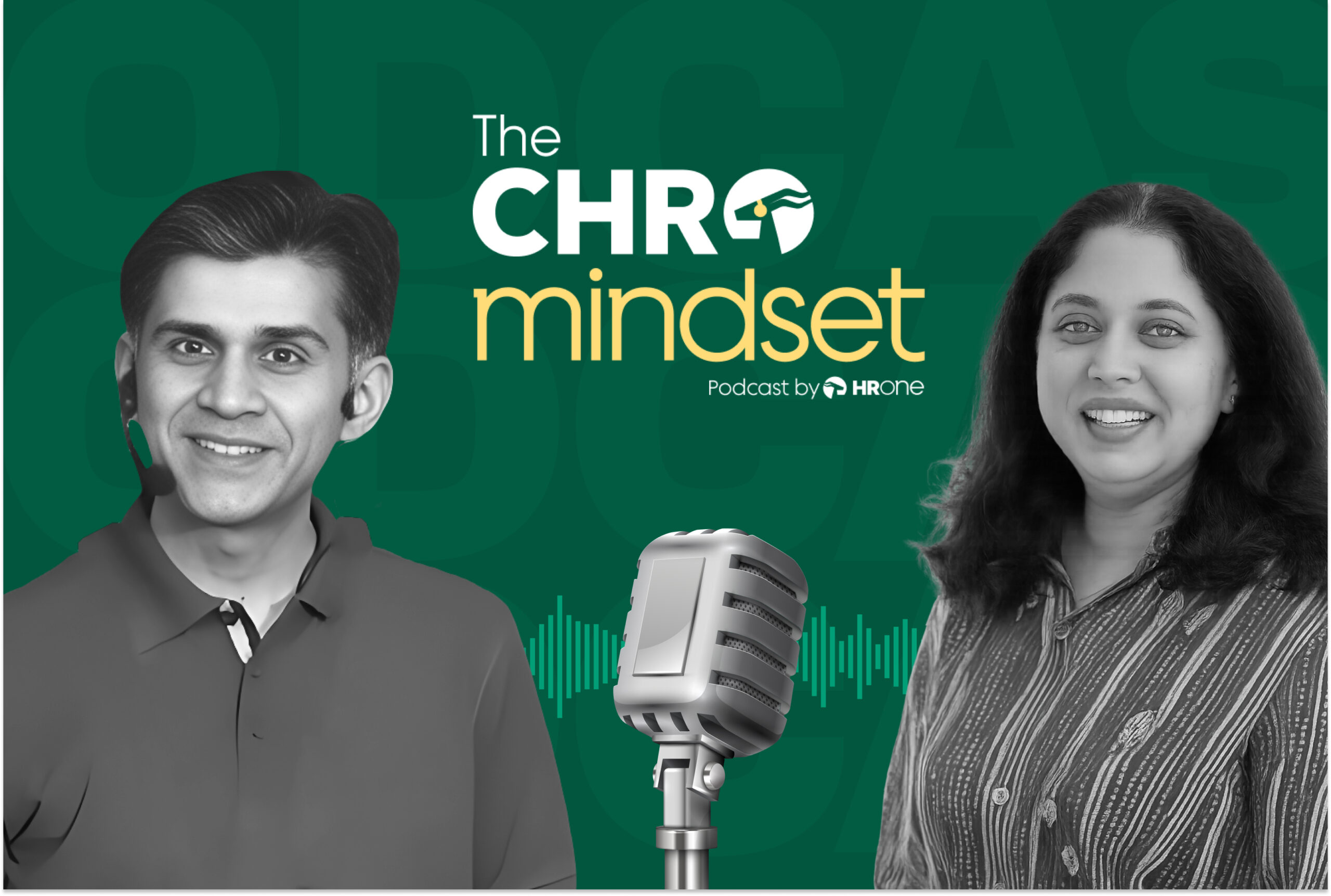


This episode dives into AI workforce planning and how it’s reshaping the future of work. Manisha Kadagathur explains why organizations must move toward a skills-based organization, shifting focus from static roles to dynamic capabilities.
She introduces frameworks like “Build, Borrow, Bought” and emphasizes the rise of micro-squads and AI-augmented teams. The conversation also explores new workforce metrics, managing AI-driven change, and why careers are becoming more non-linear.
Overall, it offers a practical and forward-looking perspective on building agile, high-impact teams where human potential is continuously evolving alongside AI.
Watch this episode if you are:
Trying to make sense of workforce planning in an AI-first world
- Rethinking hiring, skills, and team structures for the future
- Struggling to balance AI adoption with human potential
- Looking to build agile, high-impact teams instead of static orgs
Switch to the full episode right now on Spotify and learn from Manisha how to get started with a workforce that’s curated on skills, not tenures.
Top Three Insights You Will Find in This Episode
1. Your org chart is lying to you (and your skills graph isn’t)
In the world of AI workforce planning, job titles are becoming decorative. What actually matters? Skills. This episode makes a strong case for building a skills-based organization where people aren’t boxed into roles but mapped to problems. Think less “Marketing Manager” and more “growth, analytics, storytelling.”
That shift is the real future of work: fluid, dynamic, and brutally meritocratic. If you’re still planning headcount in spreadsheets, you’re solving yesterday’s problem. The winners? Teams that know what skills they have, what they need, and how fast they can redeploy them.
2. Build, Borrow, Bought is the new hiring holy trinity
Forget the old playbook. In modern AI workforce planning, it’s no longer just about hiring (buying) talent. It’s about building skills internally, borrowing from gig/consulting ecosystems, and now, deploying bots. Welcome to a truly hybrid skills-based organization. This framework perfectly captures the future of work, where AI isn’t a tool; it’s a teammate.
The smartest companies aren’t asking “Who should we hire?” but “What should humans do vs AI?” If your talent strategy doesn’t include bots yet, you’re not future-ready, you’re just well-staffed for the past.
3. Managers are dead. Long live orchestrators.
Okay, not dead but evolving fast. In the future of work, traditional task-managing is becoming obsolete thanks to AI workforce planning. The new role? Orchestrating high-output talent + AI. That means less chasing deadlines, more unlocking potential.
In a skills-based organization, managers don’t control work; they design systems where the best people (and bots) do their best work. It’s about leverage, not supervision. If your managers are still measuring effort instead of outcomes, they’re not leading; they’re lagging. The real flex now? Getting more impact with fewer, sharper teams.
Mic Drop Moment
“The challenge is moving from managing tasks to orchestrating high-output talent.”
With this statement, Manisha wants to highlight that the role of a manager is fundamentally changing. Earlier, managers focused on assigning tasks, tracking progress, and ensuring completion.
But as AI takes over routine work, this approach is becoming less relevant. Instead, managers need to focus on bringing together the right talent, tools, and systems to drive outcomes.
They must enable high performers, align them to meaningful problems, and remove barriers to productivity. In essence, the shift is from supervising tasks to orchestrating talent where the goal is not control, but maximizing impact and unlocking the full potential of people.
Read the latest blog based on The CHRO Mindset Podcast episode with Manisha Kadagathur, and learn 7 Workforce planning rules AI just broke and how you can pivot now.
No Prep. Only Perspectives
Q1. One role that will disappear faster than expected?
Manisha Kadagathur: Information relayers—people who just pass information up and down.
Q2. Skills or experience — what will matter more in hiring?
Manisha Kadagathur: Skills, especially the ability to acquire new ones.
Q3. One capability every employee must build to stay relevant?
Manisha Kadagathur: Prompt engineering or AI fluency.
Q4. One workforce metric every CHRO should start tracking today?
Manisha Kadagathur: Skills obsolescence rate of critical job families.
Q5. Centralized teams or distributed AI-enabled teams?
Manisha Kadagathur: Distributed teams, speed and decision-making beat central bottlenecks.
Frequently Asked Questions
Think of AI workforce planning as upgrading from a static Google Sheet to a live control tower. Instead of guessing headcount, you’re constantly aligning skills, roles, and AI capabilities with business needs.
It’s less “how many people do we need?” and more “what work needs to get done and who (or what) should do it?” In the future of work, this shift is survival, not strategy. Companies that ignore it will either over hire, underperform, or both.
Action: Map your top 5 business goals to required skills, not roles.
A skills-based organization stops obsessing over job titles and starts caring about what people can actually do. It’s the difference between hiring a “manager” and hiring someone who can analyze, influence, and execute. In the future of work, roles blur, but skills compound.
This approach also makes internal mobility real, not just a slide in your HR deck. You stop saying “not their job” and start saying, “they have the skill.”
Action: Create a visible skills inventory across your teams.
Here’s the truth: AI is less of a job killer and more of a job editor. It deletes the boring parts and exposes the meaningful ones.
In AI workforce planning, the question isn’t “Will this role exist?” but “What will be left of it?” The future of work favors people who can work with AI, not compete against it.
If your job is 100% repetitive, yes, you should be nervous. If it involves judgment, creativity, or empathy, you’re getting upgraded.
Action: Identify 3 tasks in your role that AI can take over today.
In a skills-based organization, three things win: learnability, AI fluency, and judgment. What you know matters but how fast you can learn matters more.
The future of work rewards people who can ask better questions (hello, prompt engineering), connect dots across domains, and make decisions AI can’t. Think less “expert in one thing,” more “adaptive across many.” Your resume is static; your skill stack shouldn’t be.
Action: Start building one adjacent skill outside your core role this quarter.
Managers are no longer task police, they’re system designers. In AI workforce planning, your job is to orchestrate talent + AI for maximum output.
That means fewer status updates, more clarity; less control, more enablement. The future of work doesn’t need micromanagers, it needs multipliers. If your team depends on you for every decision, you’re a bottleneck, not a leader.











 Secures Top Spot in
