

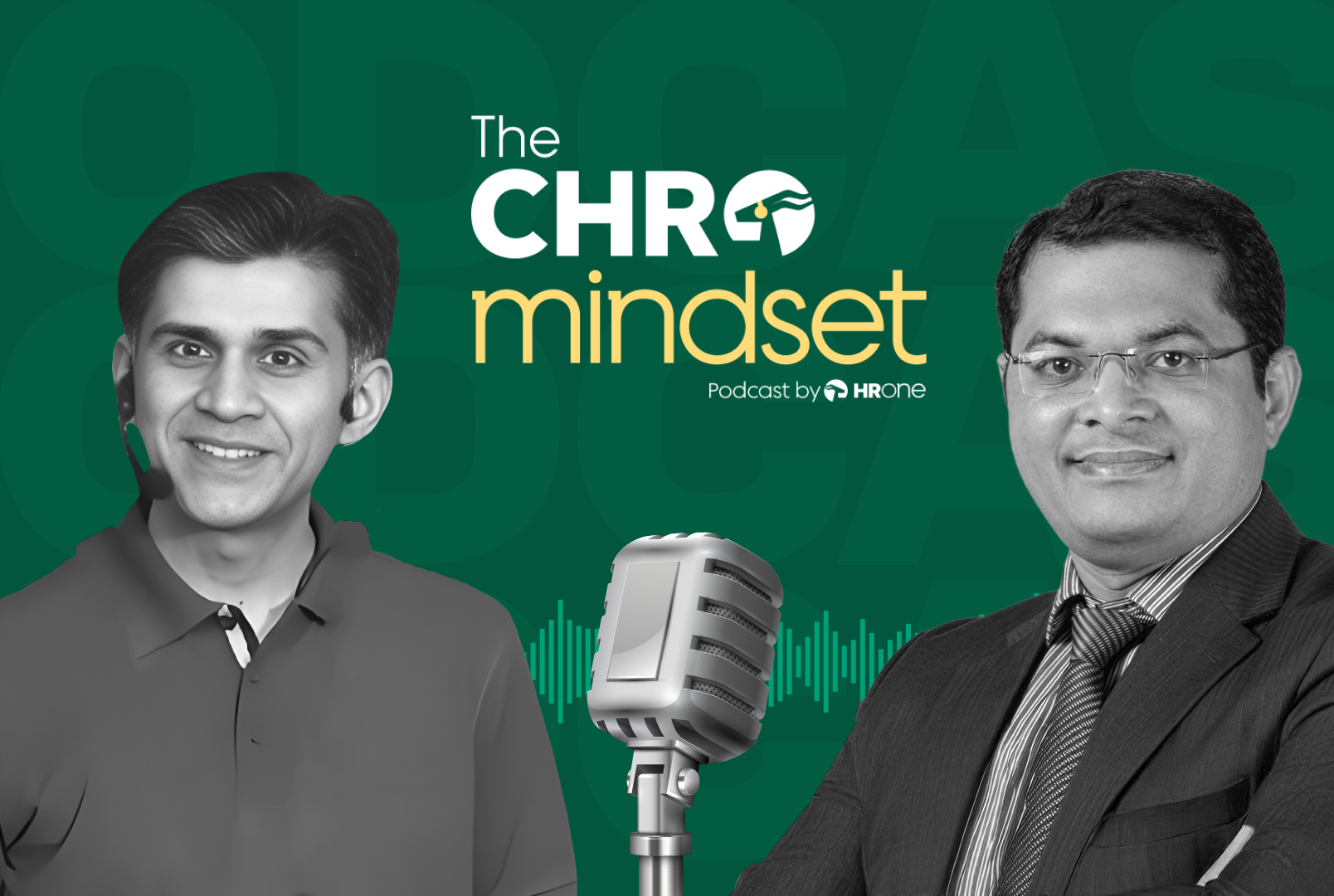


When speed meets soul, HR becomes the difference. In our latest HR podcast episode, Atul Tiwari, an accomplished HR strategist, kicks off on what it really takes to grow without breaking what makes you—your people.
Reasons to watch:
- How Company he headed as an HR scaled hiring without losing cultural alignment.
- When not to implement new HR tech—even if it looks promising.
- The SHEV framework Atul uses to boost engagement during rapid growth.
If you’re an HR leader in a high-growth org, this one’s not just an episode—it’s a field guide.
1. How can HR scale effectively in a high-growth company without losing its organization work culture?
According to Atul Tiwari, the biggest risk during rapid scale is letting culture become accidental instead of intentional which means not taking control of culture building. This is true that in early stages, culture is often organic and thoughtful, shaped by the founder and early team members, but as the headcount grows, that culture slips from the cracks.
He believes that HR must lead from the front when it comes to embedding the company’s values within the business growth strategy and work culture—for example, onboarding practices, leadership behaviors, and even recognition programs that reflect those values.
He also emphasizes that cultural fit doesn’t mean hiring people who are all the same. On the contrary, it’s about finding those who can adapt to ambiguity, respect differences, and contribute to a mission bigger than their goals.
Additional critical insight that he shares is investing in internal mobility and upskilling. Instead of relying too much on external hires, companies should nurture their own people—those already aligned with the culture.
Key Pointers:
- Don’t let culture drift—institutionalize values during scale.
- Hire for mindset and mission-fit, not just functional skills.
- Embed organization work culture into daily behaviors, rituals, and recognition.
- Promote and grow people who have already lived the culture.
- Frame roles as career opportunities, not short-term jobs.
Biggest Takeaway:
In high-growth environments, HR must serve as the custodian of culture—preserving its essence while evolving its expression.
2. What HR strategies are often overlooked during rapid business scaling?
Atul Tiwari, open-heartedly shared that during scale-up phases, businesses often prioritize speed and scale over structure and sustainability—leading to undervaluing HR.
He highlights that most HR attention goes to hiring and payroll, but crucial aspects like employee development, retention, succession planning, and engagement are mostly neglected.
The biggest gap according to Atul is the lack of end-to-end talent lifecycle—highlighting on companies onboarding quickly but not investing in retaining them.
He also warned against HR initiatives that aren’t tied to business outcomes in the longer run. For example, launching flashy new programs is of no use until they align with broader business goals.
And finally, he stressed the importance of solving present day issues before creating strategies that plan for the future.
Key Pointers:
- Don’t treat HR as a reactive function—plan proactively.
- Go beyond hiring, nurture the full talent lifecycle.
- Align HR programs with business outcomes.
- Avoid the trap of building 24-month plans if today’s issues are unresolved.
- Prioritize culture, retention, and manager enablement as part of scale.
Biggest Takeaway:
Scaling HR isn’t just about adding people—it’s about building systems that support people. Solve for today, while preparing for tomorrow.
3. How does Atul Tiwari view the evolving role of HR in modern organizations and workplace culture?
Atul Tiwari strongly believes that HR has moved far beyond its legacy role of being an administrative or policy-complying business segment. Today, it’s all about being a strategic business partner, a cultural architect, and a transformation catalyst in a workplace.
He emphasizes that in times of rapid change—whether due to business pivots, tech disruption, or market shifts—HR connects the dots across diverse teams, leaders, and particular outcomes.
Modern HR must understand business deeply and align every policy, structure, and process to support strategic growth. Atul believes that great HR is data-informed, tech-enabled, and deeply human.
He also sees HR as a driver of leadership development, organizational agility, and employee experience—especially in fast-moving companies.
Key Pointers:
- HR today is a strategic and transformational function.
- It connects people, performance, and business priorities.
- Must balance analytics, empathy, and agility.
Owns change management, leadership pipelines, and organizational work culture-building.
Enables the business to pivot faster through its people.
Biggest Takeaway:
Modern HR is no longer transactional—it’s transformational. It must be at the table, driving business outcomes through people’s strategy.
4. What role does technology play in HR, and how should companies decide which tools to adopt?
Atul Tiwari describes technology as one of the biggest force multipliers for HR today. But he raised concerns against adopting HR tools. According to him, what matters the most before implementing the technology is understanding the problem you’re trying to solve.
He explained that AI and automation have radically transformed every aspect of HR—from talent acquisition, onboarding, and performance reviews to employee engagement, attrition prediction, and organizational work culture.
He also cited examples where AI-powered tools were helpful in cutting manual screening and shortlisting time by over 70–80%, freeing up HR to focus on more strategic initiatives. However, he also highlighted a critical warning:
Before investing in tools, Tiwari recommends assessing:
- Organizational readiness and digital maturity
- Data hygiene and structure
- User-friendliness for HR teams and employees
- Integration with existing systems and workflows
Key Pointers:
- Tech is critical for scale—but only when paired with data quality.
- Start with tools that solve real, present problems.
- Ensure tech empowers both HR and employees themselves.
- AI enables personalized development and predictive insights.
- Tech should integrate with business—not operate in a silo.
Biggest Takeaway:
The right HR tech doesn’t just scale processes—it scales people. But only if your foundations (like clean data and clear goals) are solid.
5. How can HR keep engaging organizational work culture in a fast-paced, ever-changing startup environment?
Atul Tiwari says that in high-growth and fast-paced environments, the biggest challenge isn’t just keeping up with business growth speed, it’s ensuring that employees feel connected, valued, and heard during the process of changing.
His SHEV framework is a simple yet powerful approach that HR leaders can implement to foster employee engagement.
| Initial | Meaning | Approach |
|---|---|---|
| S | Seen | Employees want recognition of their work and contributions. They want to be seen. |
| H | Heard | They need to feel heard-that their voices matter. Companies can achieve this through open communication channels or regular feedback loops. |
| E | Encouraged | Managers can show small gestures like a sincere “good job” or a note of appreciation to boost their morale. A constant encouragement boosts their morale. |
| V | Valued | Make them feel valued as people, not only as employees. Basic humane actions like remembering birthdays, checking in on personal milestones, or expressing genuine concern for their well-being can strengthen engagement. |
Key Pointers:
- Focus on genuine connection, not just activities or surveys.
- Use the SHEV framework to foster deeper engagement.
- Small gestures (like recognition and personal check-ins) can have a huge impact.
- Empower managers to create spaces where employees feel heard.
- High engagement leads to better performance and retention.
Biggest Takeaway:
In a fast-paced environment, HR’s role is to create spaces for employees to feel truly connected to the organization and their work—empathy and small acts of recognition can sustain high morale.
6. How does strong leadership help in scaling the HR, and should companies invest in leadership training also?
Strong leadership development can help sharing HRs’ workload and scaling their potential by strategizing business plan, training employees for adaptive performance, and helping them carry a positive outlook throughout.
Atul Tiwari explains that during the process to scale HR, companies often allocate their resources to training, overlooking the needs for leadership and guidance which is crucial for workforce growth including HR. It leads to neglecting the managers who are the real enablers of organizational work culture and operational excellence.
He adds that it is important to develop leaders at all levels and not only the executive leaders who are at the top. He also mentioned that developing from within accelerates growth and creates a stronger, more aligned culture because these leaders have grown with the company and already understand its core values.
Without the right training, frontline managers may struggle to inspire and guide teams, especially HR effectively.
Key Pointers:
- Invest in leadership development at all levels—not just top executives.
- Frontline leaders are crucial in scaling operations and driving organizational work culture.
- Develop talent from within for faster growth and alignment with values.
- Provide training for middle management to improve team performance.
- Focus on leadership qualities that align with company culture.
Biggest Takeaway:
Scaling requires strong leadership at every level. Frontline managers play a key role in sustaining culture, while leadership development accelerates growth and strengthens alignment.
7. What outdated HR practices are still prevalent today, and how can companies address them to improve organizational corporate culture?
Atul Tiwari highlighted that despite advancements in HR technology and thinking, some outdated practices still linger in organizations, often hindering business success and leadership development.
He highlighted the Bell Curve performance management system which is widely criticized for its inefficiency and lack of fairness is still practiced in companies even in 2025.
One more practice Atul challenged was the probation period. He questions the efficacy of the probation policies, especially if nothing changes post-probation. If the probation period doesn’t serve a clear purpose (other than to check if the employee fits), it might be time to reconsider.
Key Pointers:
- Bell Curve in performance management is outdated and often ineffective.
- Companies should question probation policies—especially if they add little value.
- Focus on continuous feedback and real-time performance improvement, not annual reviews.
People-focused metrics should be prioritized over forced distributions.
Biggest Takeaway:
Outdated practices like the Bell Curve and unnecessary probation periods limit growth. Continuous, real-time feedback and more humane performance evaluation systems are needed for modern HR.
8. What are the biggest misconceptions about HR today and how has their role in corporate values evolved?
According to Atul Tiwari, the biggest HR misconception is that it’s about chasing checklists and ensuring compliance to policies and regulations. But this is not true. He adds that HR is playing significant roles in changing organizational design, strengthening leadership, creating a dynamic workplace that is change-ready, and managing talent to sustain desired company growth.
And this evolution is not sudden, it is gradual. With the emerging need to hire the best talent to achieve business objectives and the advent of HR technology, their role has become more strategic and data-backed—outgrowing the phase when they were more like side-heroes. Today, HR holds the ultimate power to drive business transformation by focusing on informed decisions based on data and insights.
Key Pointers:
- HR is no longer just a support function—it’s data-driven and strategic.
- Focus on business outcomes, not just administrative tasks.
- HR leads organizational work culture design, and strategy transformation.
- HR must align people’s strategies with company goals.
Biggest Takeaway:
HR today is a strategic partner, not a back-office function. It’s powered by data and insights, driving transformation and organizational growth.












 Secures Top Spot in
