


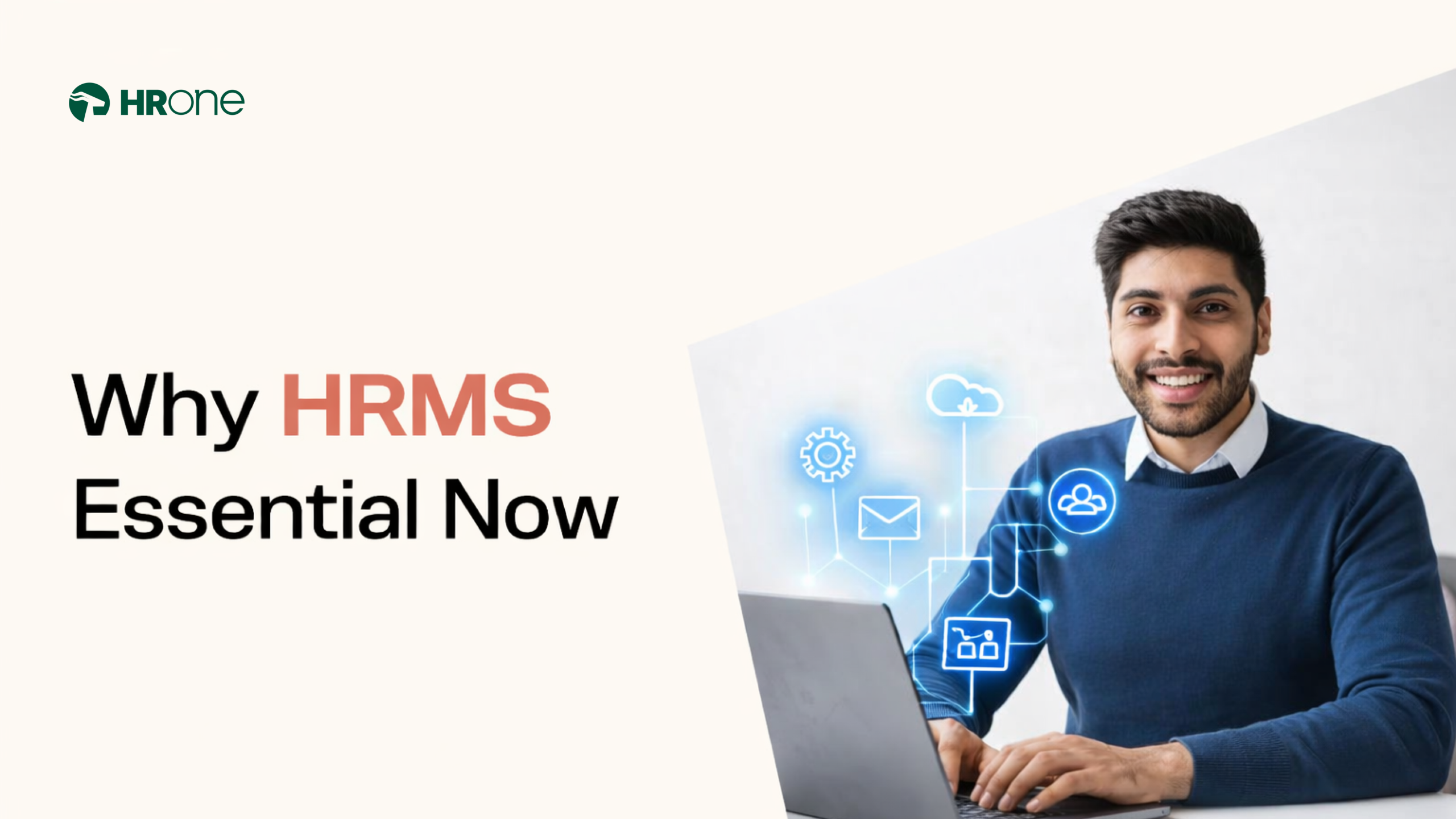
An HR manager spent three hours last week looking for one employee’s joining documents.
Not missing. Just scattered.
Just imagine this scenario.
Emails, WhatsApp, forgotten folders.
Now imagine this across hiring, confirmations, exits, and role changes. And now you can understand why HR stops managing people and starts chasing paperwork.
And that’s the real gap most teams don’t see. A good HRMS doesn’t just store data. It fixes the flow.
And that’s where the real shift begins.
What Is HRMS and Why Does It Matter for Employee Lifecycle?
An HRMS is software that brings all your people management activities under one roof. Think of it as your HR command center where recruitment, onboarding, payroll, performance tracking, and offboarding happen in connected workflows rather than isolated spreadsheets.
Why does this matter? Because fragmented systems create gaps. And gaps create problems.
When your hiring data doesn’t talk to your payroll system, someone manually enters information twice. When performance reviews live in separate files, tracking growth patterns becomes guesswork. When exit processes depend on memory, compliance suffers.
An integrated HRMS changes this by:
- Creating a single employee record that updates across all modules
- Automating repetitive tasks that eat up your day
- Generating reports that actually tell you something useful
- Reducing errors that come from manual data handling
The shift from managing people in silos to managing them as a complete picture isn’t a luxury anymore. It’s becoming a basic expectation in Indian workplaces.
HRMS Hiring Benefits: Simplifying Recruitment and Onboarding
Let’s talk about where the employee journey begins. Recruitment used to mean posting jobs on multiple portals manually, drowning in resumes, and losing track of promising candidates because someone forgot to update a spreadsheet.
HRMS hiring benefits start with an applicant tracking system that acts as your recruitment brain. Post a job once, and it pushes to multiple platforms. Resumes flow into a central database where you can search, filter, and shortlist without switching between ten browser tabs.
Here’s what actually changes:
- Time to hire drops because you’re not wasting days on coordination calls
- Candidate experience improves when communication happens automatically
- Interview scheduling becomes a system feature, not an email nightmare
- Hiring managers can review candidates without playing telephone with HR
But recruitment is only half the story. What happens after the offer letter?
Digital onboarding through HRMS means new joiners upload documents before their first day. Welcome emails trigger automatically. Training modules get assigned based on role. IT and admin teams receive alerts about laptop requirements and access credentials.
I’ve seen companies cut onboarding time from two weeks to three days using these workflows. The new employee feels prepared. HR looks organized. Everyone wins.
Managing Employee Performance and Development with HRMS
Once people are onboarded, real work begins. How do you track whether they’re growing? How do you identify who needs support and who’s ready for promotion?
Most Indian companies still run annual reviews through email chains and Word documents. The problem? By the time you compile feedback, it’s already outdated. Performance management should be continuous, not a yearly event.
HRMS platforms handle this through:
- Goal setting tools where employees and managers align on quarterly targets
- Continuous feedback mechanisms that capture observations in real time
- 360 degree reviews that pull input from peers, managers, and reportees
- Learning management integration that suggests courses based on skill gaps
The data tells stories. When you track performance over months, patterns emerge. You notice that a particular team consistently misses deadlines after project handovers. You spot high performers who haven’t received recognition in quarters.
These insights directly impact retention. Employees stay when they see a growth path. They leave when they feel invisible. Good HRMS software makes invisibility harder because the system keeps track even when humans forget.
Exit Management HRMS: Making Sure Offboarding Runs Smoothly
Nobody talks about exits until they handle one poorly. Then it’s a scramble.
The employee resigns. Their laptop is a company property. They have pending reimbursements. Someone needs to schedule an exit interview. Passwords must be revoked. Knowledge needs transferring. The full-and-final settlement has a legal timeline.
Exit management HRMS turns this chaos into a checklist that actually works.
When resignation gets recorded, automated workflows kick in:
- IT receives asset recovery requests with deadlines
- Finance calculates pending dues and gratuity
- Reporting managers get notified about knowledge transfer requirements
- Exit interview links go out without HR intervention
Compliance matters here. The Labour laws in India specify timelines for final settlements. Miss them, and you’re looking at legal exposure.
An HRMS tracks deadlines and sends reminders before problems become expensive.
There’s also a reputation at stake. Former employees talk. They post on LinkedIn and Glassdoor. A messy exit creates resentment that spreads. A smooth one? That leaves the door open for rehires and referrals.
Key Features to Look for in HRMS Hiring to Exit Solutions
Not all HRMS platforms offer the same capabilities. Before you commit, know what matters for your organization.
Here’s a comparison that helps:
| Feature | Must Have | Nice to Have |
| Unified employee database | Yes | – |
| Applicant tracking system | Yes | – |
| Digital onboarding workflows | Yes | – |
| Performance management | Yes | – |
| Exit automation | Yes | – |
| Mobile app access | Depends on workforce | Yes |
| Custom workflow builder | Yes for mid size companies | – |
| Third party integrations | Yes | – |
| Analytics dashboard | Yes | – |
| AI based resume screening | – | Yes |
For smaller companies, basic features cover most needs. But if you’re managing 500 plus employees across locations, customization becomes important. Can the system match your existing approval hierarchies? Does it support multiple languages? Will it integrate with your current payroll software?
Ask vendors about implementation support, too. The best features mean nothing if adoption fails because training was rushed.
HROne offers most of these capabilities designed specifically for Indian HR requirements, which matters when you’re dealing with local compliance needs.
Let’s Rewind Once More!
Managing employees from hiring to exit shouldn’t feel like fighting fires. Every hour spent chasing paperwork is an hour not spent on actual people’s development.
HRMS software exists to handle the repetitive, error-prone, forgettable tasks, so HR teams can focus on decisions that matter. Better hiring choices. Meaningful performance conversations. Respectful exits that protect relationships and compliance.
If your current process involves too many spreadsheets, too many manual follow ups, and too many “I forgot to send that email” moments, it might be time to evaluate what a proper system could change. The companies getting this right aren’t necessarily bigger or better funded. They’ve just decided that managing people well requires better tools.













 Secures Top Spot in
