


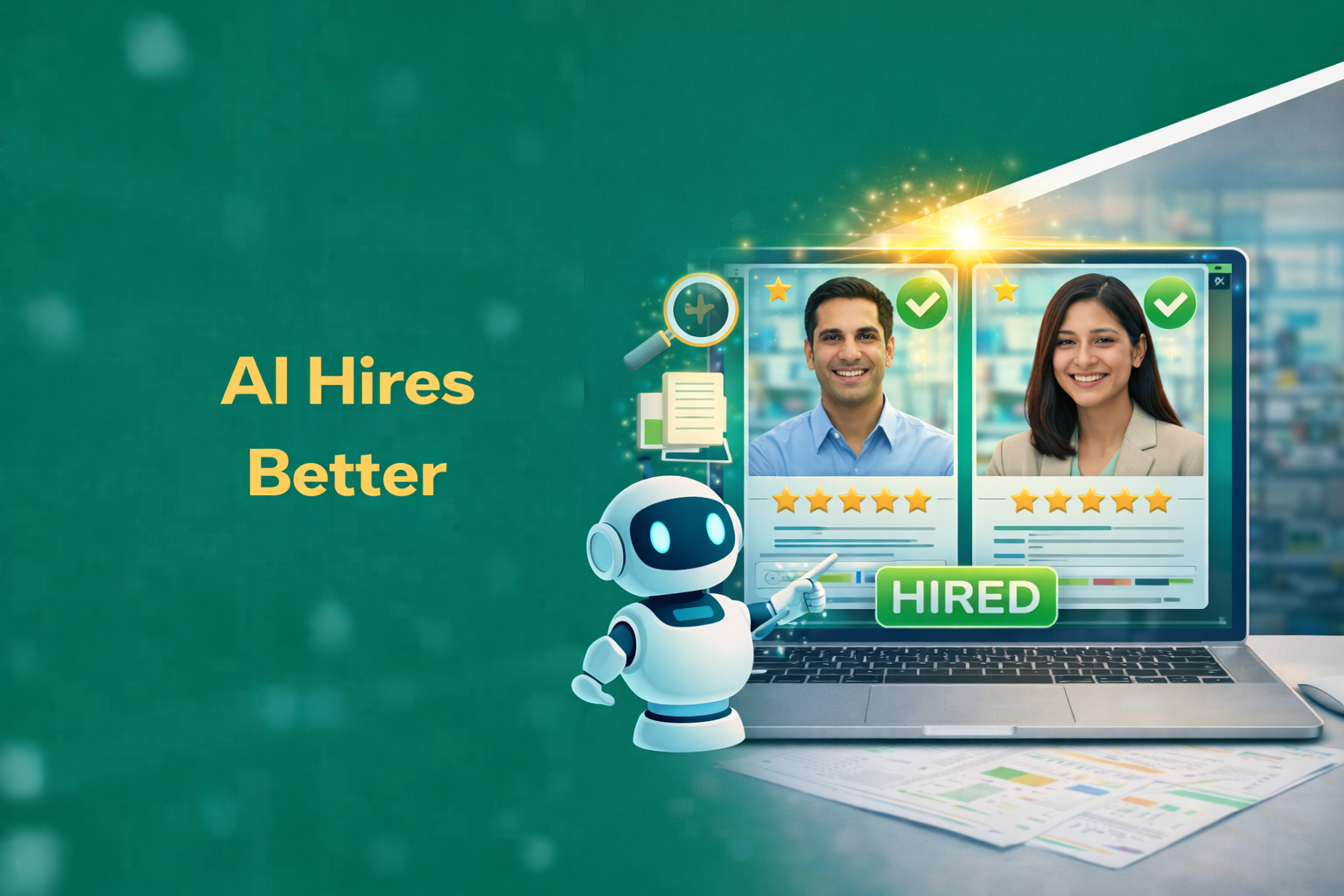
Most hiring failures don’t happen because of talent shortage. They happen because of Signal Dilution — when good candidates disappear inside resume noise and volume-driven screening.
I’ve watched HR teams drown in 500 applications for a single role. Only to hire someone who leaves within six months.
Here’s what nobody tells you about traditional hiring. It rewards the loudest resumes, not the best candidates. Keywords get gamed. Good people get filtered out. And recruiters spend 80% of their time on administrative tasks instead of actual evaluation.
This is the real issue in modern hiring: Signal Dilution — when high-potential candidates get buried under resume noise, keyword gaming, and volume-driven screening.
The shift from volume-based to quality-focused hiring is real. Companies using AI recruitment tools for hiring report 35% better retention rates. That’s not marketing fluff. It’s basic logic. When you screen for fit, performance, and potential instead of keyword matches, you get better people. The technology exists. The question is whether you’re ready to use it properly.
Hiring breaks not because there are too many candidates — but because there’s too little signal.
What Is AI-Powered Recruitment Software?
AI powered recruitment software uses machine learning, natural language processing, and predictive analytics to evaluate candidates. It’s not your grandfather’s applicant tracking system. Traditional ATS solutions act like glorified databases. They store resumes and search keywords. That’s about it.
AI-based candidate screening software thinks differently. It reads context. It understands that a “product manager at a Series B startup” carries different weight than the same title at an MNC. It connects experience dots that humans miss during quick scans.
The core difference comes down to intelligence versus storage. Traditional ATS systems count matches. AI evaluates probability of success. That difference changes everything.
The Candidate Quality Funnel (Before vs After AI)
Volume → Noise → Keyword Matches → Missed Talent
⬇️ AI Intervention ⬇️
Signal → Fit → Potential → Quality Hires
Key Features of AI Recruitment Tools for Hiring
Each of the following features exists for one reason: to convert resume volume into hiring signal.
Modern AI recruitment tools pack several capabilities into one platform:
- Resume parsing that extracts meaning, not just text
- Candidate matching based on success patterns, not keyword density
- Automated screening that ranks applicants by predicted performance
- Interview scheduling that eliminates the endless email chains
- Bias detection that flags problematic patterns in your hiring data
These features work together. The parsing feeds the matching. The matching informs the screening. And the whole system learns from your actual hiring outcomes. When someone you hire performs well, the system gets smarter about finding similar candidates.
How AI-Based Candidate Screening Software Enhances Quality
Quality improvement starts with understanding what “quality” means for each role. AI-based candidate screening software builds profiles of successful employees in your company. Then it looks for similar patterns in new applicants.
This goes beyond surface-level matching. The software examines career trajectories. Someone who progressed from junior developer to tech lead in three years shows growth potential. Someone who stayed static for eight years might not. Both resumes could contain identical keywords. Only one signals the ambition you need.
The best predictor of future job performance isn’t education or even experience. It’s the pattern of how candidates have grown in their careers.
Dr. Prasad Kaipa, CEO Coach and Author
Cultural fit assessment happens through analysing communication patterns, stated preferences, and career choices. Does the candidate prefer structured environments or chaotic ones? Do they thrive in large teams or small ones? AI recruitment tools for hiring can infer these traits from resume data and application responses.
Smart Resume Analysis with AI Powered Recruitment Software
Resumes fail because context gets flattened. AI restores context.
Smart analysis includes:
- Contextual understanding of company types and their work environments
- Experience validation through cross-referencing roles and timelines
- Skills inference from project descriptions and responsibilities
- Achievement extraction from bullet points buried in long resumes
- Red flag detection for inconsistencies or gaps
The system reads between the lines. A candidate who “managed a team of 12 engineers” at a startup faced different challenges than someone with the same description at Infosys. AI powered recruitment software weighs these differences appropriately.
Predictive Analytics for Candidate Success
Here’s where AI recruitment tools for hiring deliver real value. Predictive models analyse your historical hiring data. They identify which candidate attributes correlate with success in your specific company.
Maybe your top performers share certain educational backgrounds. Or career path patterns. Or assessment scores. The AI finds these connections and applies them to new candidates. Each hire generates more data. The predictions get sharper over time.
Retention likelihood matters too. It costs Indian companies roughly six months of salary to replace a mid-level employee. AI-based candidate screening software can flag flight risks before you make an offer. Someone who changes jobs every 18 months will probably do it again.
Good hiring looks like intuition. Great hiring is intuition validated by data.
Key Benefits of Using AI Recruitment Tools for Hiring
The business case for AI in recruitment comes down to measurable improvements:
- Time-to-hire drops by 40-60% through automated screening
- Quality-of-hire improves by 25-35% based on first-year performance reviews
- Cost-per-hire decreases as recruiter productivity increases
- Candidate experience scores rise with faster response times
- Offer acceptance rates improve when you reach top candidates quickly
Traditional vs AI Recruitment Outcomes
| Metric | Traditional | AI-Enabled |
|---|---|---|
| Time to Screen 100 Resumes | 8 hours | 15 minutes |
| Quality Candidates Identified | 12% | 34% |
| First-Year Retention | 67% | 82% |
| Recruiter Workload | High admin | High strategy |
Reducing Unconscious Bias in Candidate Selection
Bias reduction works best when humans stop acting as filters and start acting as reviewers.
Every recruiter has biases. We favour candidates from familiar colleges. We respond differently to names that sound like ours. We make snap judgments based on photos or formatting choices.
AI-based candidate screening software standardises evaluation criteria. It looks at qualifications, not demographics. The algorithm doesn’t care where someone went to school. It cares whether their skills match your needs.
This doesn’t mean AI is perfect. Biased training data creates biased models. But when implemented correctly, AI recruitment tools for hiring apply consistent standards across all applicants. Something human recruiters struggle to do at scale.
Improving Time-to-Hire Without Sacrificing Quality
Speed and quality only conflict when screening is manual. AI removes that trade-off.
AI powered recruitment software breaks this constraint. It screens thousands of applications simultaneously. It ranks candidates by fit score. Recruiters start their day with a prioritised list of people worth talking to.
The best candidates disappear within 10 days. Slow hiring processes lose them every time. AI lets you move fast and smart. You reach top talent while they’re still interested. And you skip the days spent reviewing obviously unqualified applications.
Implementing AI-Based Candidate Screening Software: Best Practices
Most AI hiring failures aren’t technical. They’re trust failures — recruiters don’t understand or believe the system.
Start with clear goals. What does “better hiring” mean for your organisation? Faster time-to-fill? Higher retention? More diverse candidate pools? Your definition shapes how you configure and measure the system.
Training matters more than most companies expect. Recruiters need to understand what the AI does and doesn’t do. They need to trust the rankings while maintaining human judgment for final decisions. This balance takes practice.
Integrating AI Recruitment Tools with Your Current Tech Stack
Most organisations already use some HR technology. Your AI solution needs to play nicely with existing systems.
Key integration considerations include:
- ATS compatibility for seamless data flow
- HRIS connections for onboarding handoffs
- Assessment tool integration for combined scoring
- Calendar systems for automated interview scheduling
- Communication platforms for candidate updates
Data migration deserves special attention. Your historical hiring data trains the AI models. Clean data produces accurate predictions. Messy data produces expensive mistakes. Budget time for data cleanup before implementation.
HROne’s recruitment module, for example, connects with common Indian payroll and attendance systems. This reduces duplicate data entry and creates a unified employee record from first application to retirement.
Measuring Success with AI Powered Recruitment Software
You can’t improve what you don’t measure. Track these KPIs from day one:
- Quality-of-hire: Performance ratings of AI-screened hires versus traditional hires
- Retention rates: 90-day, 6-month, and 1-year retention by source
- Time-to-fill: Days from requisition to accepted offer
- Hiring manager satisfaction: Survey scores on candidate quality
- Cost-per-hire: Total recruitment spend divided by successful hires
Review these numbers quarterly. Adjust your AI configuration based on what you learn. The software should get more accurate over time. If it doesn’t, something’s wrong with your implementation.
If quality-of-hire doesn’t improve, AI isn’t broken — your inputs are.
The Future of AI in Recruitment Quality
The technology keeps advancing. Here’s what I expect to see in Indian recruitment over the next few years:
- Video interview analysis that evaluates communication skills and cultural fit
- Continuous learning models that improve with each hiring decision
- Skills verification through practical assessments built into applications
- Proactive talent matching that identifies candidates before you post jobs
- Ethical AI frameworks that ensure fairness and transparency
The companies that win the talent war won’t be the ones with the most recruiters. They’ll be the ones with the smartest systems.
Ronnie Screwvala, Entrepreneur and Co-founder of upGrad
Indian companies have a particular opportunity here. Our talent pool is massive. Our technical skills are strong. AI-based candidate screening software can help us match the right people to the right roles at unprecedented scale.
All future improvements point in one direction: clearer signal, better fit, higher quality.
Conclusion
AI recruitment isn’t about automation. It’s about restoring signal in a hiring system overwhelmed by noise.
Let algorithms handle the screening. Let recruiters handle the conversations.
The quality improvement is real. Better candidates, faster hiring, lower turnover. These aren’t theoretical benefits. They’re measurable outcomes that companies using AI recruitment tools for hiring see every quarter.
If you’re still screening resumes manually, you’re working harder than necessary. And you’re probably missing great candidates in the process. The technology exists to do better. The question is whether you’ll use it.
See how AI restores candidate signal in real hiring scenarios — not demo dashboards.














 Secures Top Spot in
