

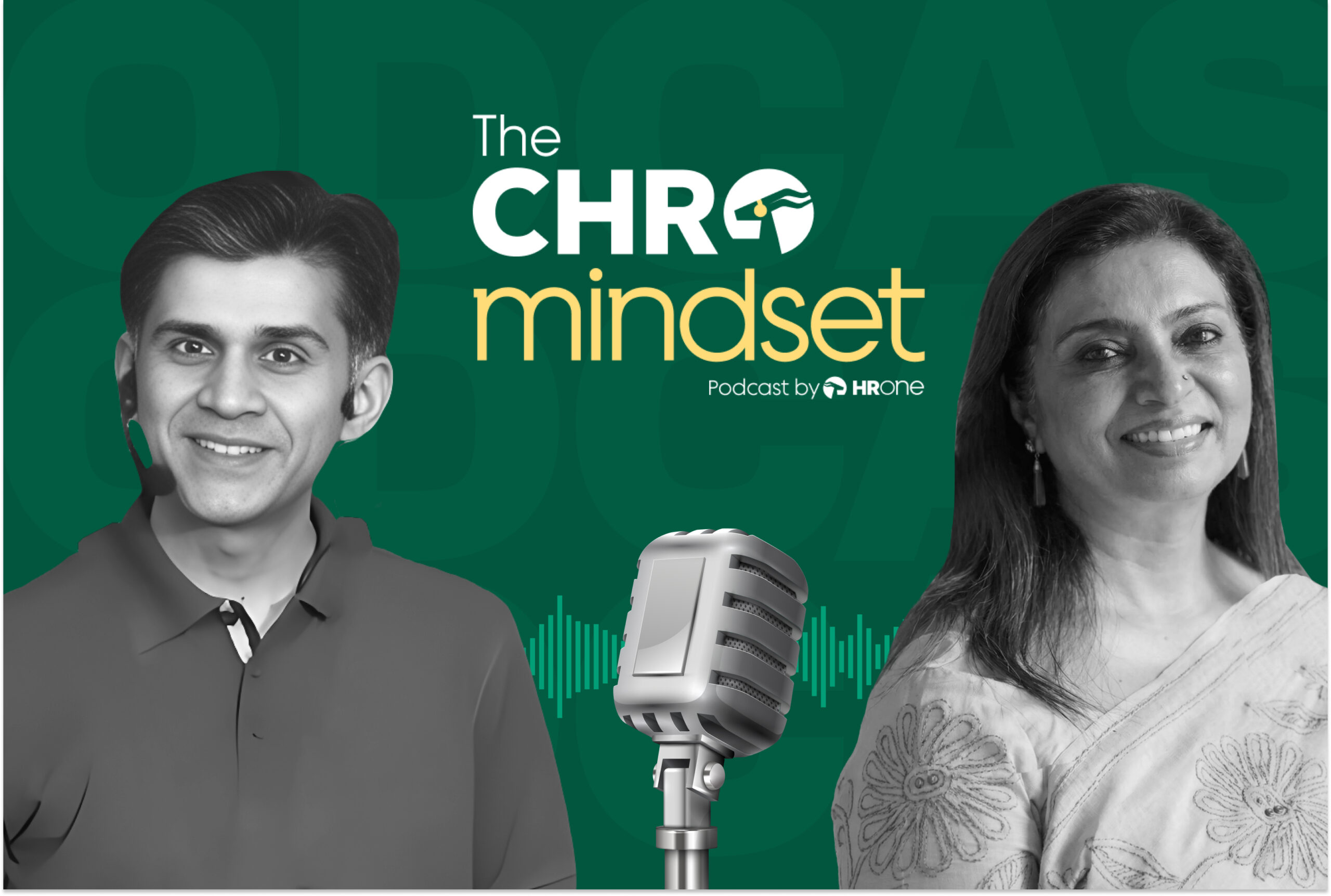


Hey there! Welcome to the first episode of The CHRO mindset Season 4. We are back with the series that dives deeper into HR insights and industry dynamics.
With Simin Askari being the first guest on The CHRO mindset S4, here’s your chance to view HR from the lens of “ecological systems” that have unique ways to indicate internal problems—very much like early signs at the workplace.
So, are you ready to dive in India’s most loved HR podcast? Hit play now.
Watch This HR Podcast If You Are…
An HR leader or CHRO with lingering questions like:
- How should I spot early signs at my workplace?
- What’s the secret to companies immune to sudden market changes?
- What is the corporate equivalent of metabolism, immunity, etc.
Top Three Insights You Will Find in This One of the Top HR Podcasts
1. Your organizations need constant renewal just like living beings for a good cultural immunity.
Ever seen a living being stuck in a life phase? No. They keep on renewing, adapting, and regulating according to the external changes. Similarly, a company cannot stay stagnant at a stage because then its growth would be hindered. Your organization must move to make responsive changes to market behavior. And you can do that if you:
- Keep tabs on how customers act, what competitors do, and emerging technologies.
- Change offerings quickly based on feedback from the market.
- Avoid rigid hierarchies and make decisions quickly.
- Use market insights to guide decisions.
- Train employees continuously to stay relevant with changing needs.
2. It’s YOU, the HR, not the CEO who manages your company’s “metabolism.”
HR’s role is to create a strong culture of engagement and scrutinize what interferes with it. Simin Askari explains that metabolism is nothing but how people interact, how they feel valued, how they grow in the organization, and things like conversations around performance, around recognition, feedback mechanisms, and upskilling people. These kinds of feed into an organization’s metabolic functions. So, to keep your company’s metabolism high you can:
- Fix approval delays within 48 hours to keep work moving.
- Share quick feedback every week instead of waiting for reviews.
- Give each employee one learning goal to complete every month.
- Use market insights to guide decisions.
- Reduce 1-hour meetings to 20 minutes and cancel the ones with no agenda.
3. “Company cultural immunity” is the key to evolving as an organization.
Just like ecological systems absorb shocks and become stronger, organizations must work on creating adaptive systems and structures. These structures may include adaptive work style, agile mindset, cross-functionality, etc. When your company culture immunity is strong, your company can withstand worst case scenarios like technological resistance, legal compliance violations, weak leadership, generational conflicts, mass resignations, or high skill gaps with persistence that comes with a sense of belonging—a byproduct of resilient immunity. So, in case you need some tips to boost it, here they are:
- Check in weekly with each team member to notice early signs of disengagement.
- Hold open forums or 1:1s where employees can speak freely without fear.
- Address any toxic behavior immediately—don’t wait for patterns to form.
- Celebrate team wins in meetings or newsletters, so collaboration becomes visible and valued.
- Balance workloads by tracking hours and priorities to prevent burnout and stress
Mic Drop Moment
“The healthiest organizations don’t just survive change; they evolve through it.” – Simin Askari
Did you feel it? Yes, the healthiest organizations don’t just survive changes like recession, inflation, or low investment; they evolve and become more resilient in response.
Simin Askari in this episode explains that the key difference between changing and evolving is being conscious. When you know that a crisis in your company will help you and your workforce evolve and become a better version of themselves, that’s the first step to becoming a healthy workplace. But when you center your thoughts on the “survival mode,” that’s when toxic workplace traits, like politics, burnout, attrition, and absenteeism come to the surface.
No Prep. Just Perspectives.
- “Sometimes you just have to take a break. You cannot improve in just a very linear fashion.”
- “You have to go back and look at yourself like other people look at you and fix these problems.”
- “You have to develop to that stage… where the moves come naturally.
- “Every once in a while, you might find something totally different, unexpected that you didn’t want to use and end up in it.”
The Rapid-Fire Round: No Prep, Only Perspectives.
- Q1. One word that best describes your organization’s current life stage.
Simin Askari— Renewal. - Q2. A leadership trait that has become evolutionary dead.
Simin Askari— Command and control of people. - Q3. What’s harder? Starting evolution or sustaining it?
Simin Askari— I think sustaining evolution is going to be harder because, you know, sustaining requires a lot of constant attention. - Q4. If you could delete one outdated HR practice tomorrow, what would it be?
Simin Askari— I would consider the year-end appraisal process and a time-bound promotion to be a very outdated practice that I would definitely do away with immediately.
- Q5. Growth or renewal which gets more boardroom attention.
Simin Askari— I think growth would be visible because growth is visible; growth is quantifiable, and growth, of course, is something that would get the attention of the board. - Q6. Finish this sentence please: The healthiest organizations don’t just survive change. They…
Simin Askari— evolve through it. They treat disruptions not as a threat, but as opportunities to learn and to adapt.
Food for Thought: How Do I Keep My Org’s Health Optimal?
1. How can HR detect burnout early and keep my company’s culture immunity strong?
HR can look for disengagement, absenteeism, and attrition to detect burnout easily as these are some of the clearest signs. Additionally, pulse surveys or weekly check-ins can also serve the purpose of keeping inputs anonymous and truly honest. And the most effective method is to integrate AI-powered HRMS into your systems to gain access to insightful dashboards, displaying all the information without much effort. Just in case you need some tips to track it, here they are:
- Spot silence and reduced participation.
- Track workload vs output consistency.
- Run weekly anonymous pulse checks.
- Use HR analytics for patterns.
2. What are some silent signs that my company needs better policies?
When you see good performers leaving your company or when you realize your employees have zero work satisfaction, that’s when you should know you need to revise your policies. Some silent signs are:
- High attrition and low engagement
- Low productivity and low performance
- Conflicts increasing every day
- Leaves going up, energy going down
- More complaints than appreciation
3. How do organizations develop a culture of safety?
To build a culture of safety, you need to bring harmony to your people. Providing psychological safety to your employees so that they feel comfortable enough to raise their concerns with their managers and HR is the first step to remove fear and vulnerability. Here are the key points you must consider while taking an approach to building a peaceful and productive culture. Start with:
- Creating safe spaces/sessions for expression
- Taking prompt actions on feedback
- Encouraging leaders to model acceptance
- Making fair and transparent decisions











 Secures Top Spot in
